

 Alert!

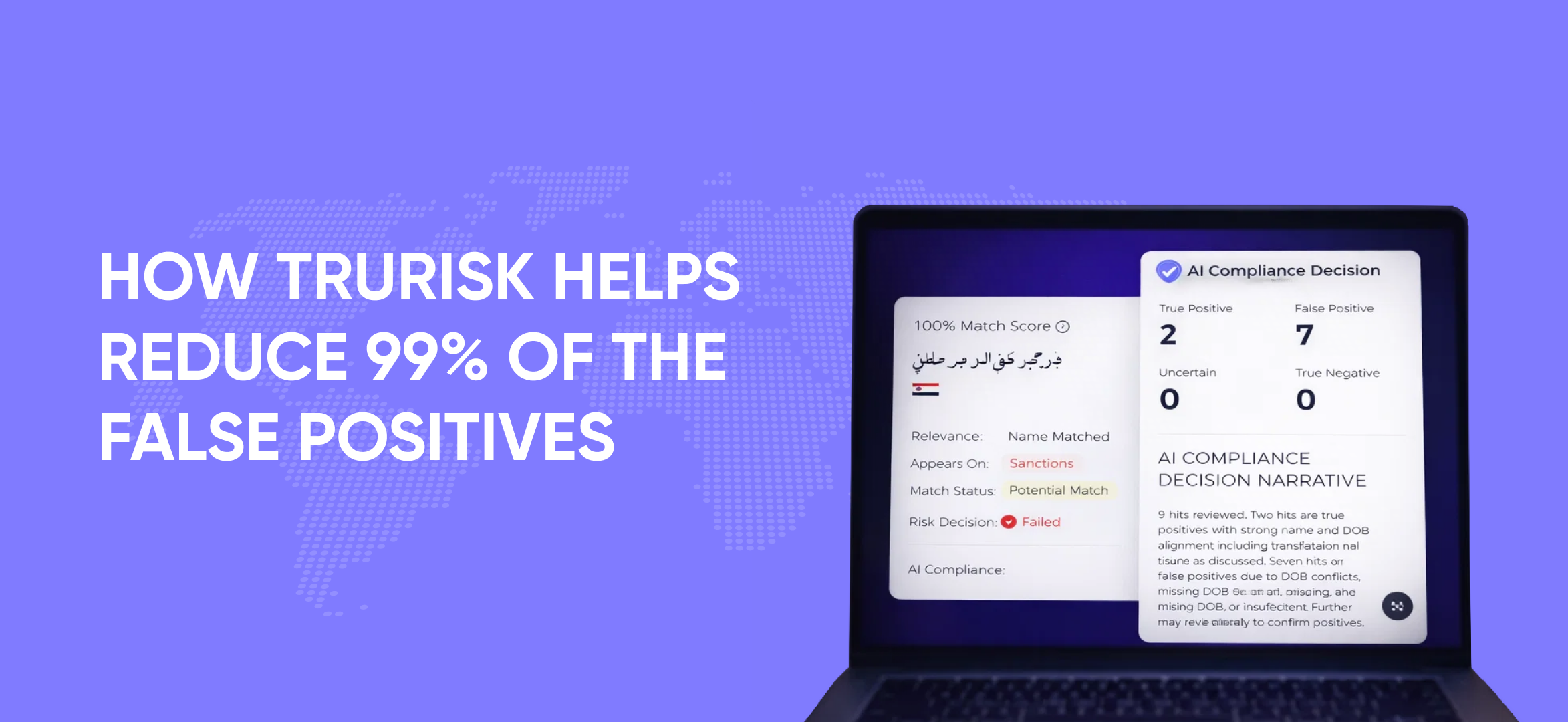
How TruRisk Helps Reduce 99% of the False Positives
Others
February 16, 2026


For many financial institutions, AML alert handling has become a scale problem. The financial crime threat remains real, but day-to-day workload is often dominated by alert volume and false positives, which pushes teams into manual triage and creates fatigue. As typologies evolve and scrutiny stays high, teams also carry the burden of keeping decisions consistent, well-documented, and audit-ready for regulators.
A considerable percentage of these alerts are false positives. Conventional rule-based screening systems often cannot differentiate genuine exposure from irrelevant matches, especially when they touch on common names, mismatched data, and cross-border operations.
As a result, rules help, but better inputs and context are also required. Therefore, it calls for a risk-based screening methodology that is driven by context, relevance, and a clear alert rationale. TruRisk supports this shift by adding contextual risk intelligence to screening, helping teams distinguish true exposure from low-risk noise.
In practice, by filtering non-material alerts and showing why a match genuinely matters, TruRisk will help analysts deliver work more effectively. It enhances the quality of investigations and enables quicker reporting, consistent with a risk-based approach.
Why False Positives Stay Stubborn in Screening Programs
False positives do not happen only because your monitoring system thresholds are poorly calibrated. They usually occur because of a data and context problem. Common drivers include the following:
- Name Similarity and Spelling Variants
Same names, different spellings, even transliteration, and aliases can create matches that might appear real but are not genuine in reality.
- Weak Identifiers During Onboarding
Date of birth, nationality, address, and document details are not always captured consistently, especially across channels and jurisdictions. Weak identifiers force teams to decide based on a name match alone.
- Lack of Relevance in Adverse Media
Negative news can be noisy. One article about a different person with the same name can trigger a match that takes time to clear.
- No Consistent Rationale across Analysts
Two analysts can reach the same outcome but document it differently. That makes QA harder and weakens audit trails.
Regulators expect controls that match the risk profile. FATF describes the risk-based approach as central to effective implementation of the FATF Recommendations. It calls for identifying and understanding risk and applying mitigation measures that match the level of risk.
In practice, screening teams need tools that do more than match names. They need tools that help explain and prioritize.
How TruRisk Solves the False Positive Problem
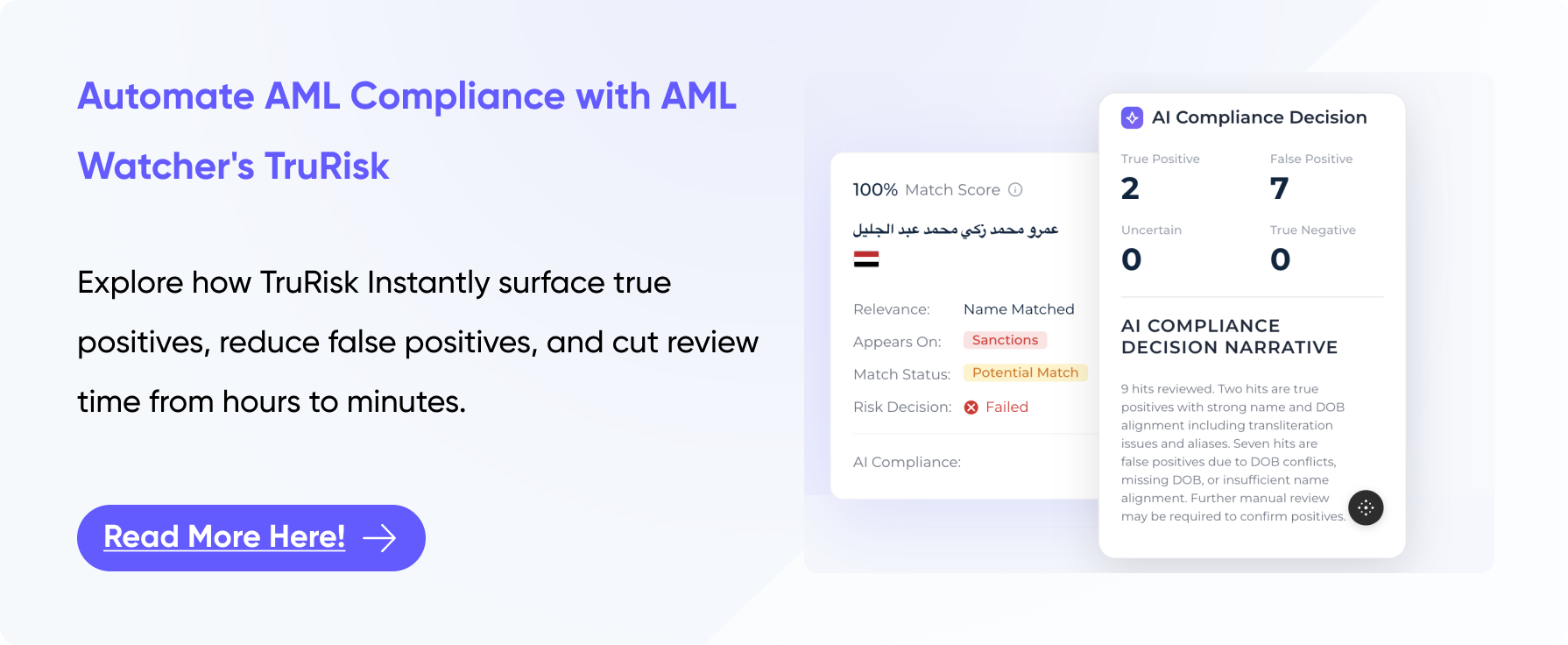
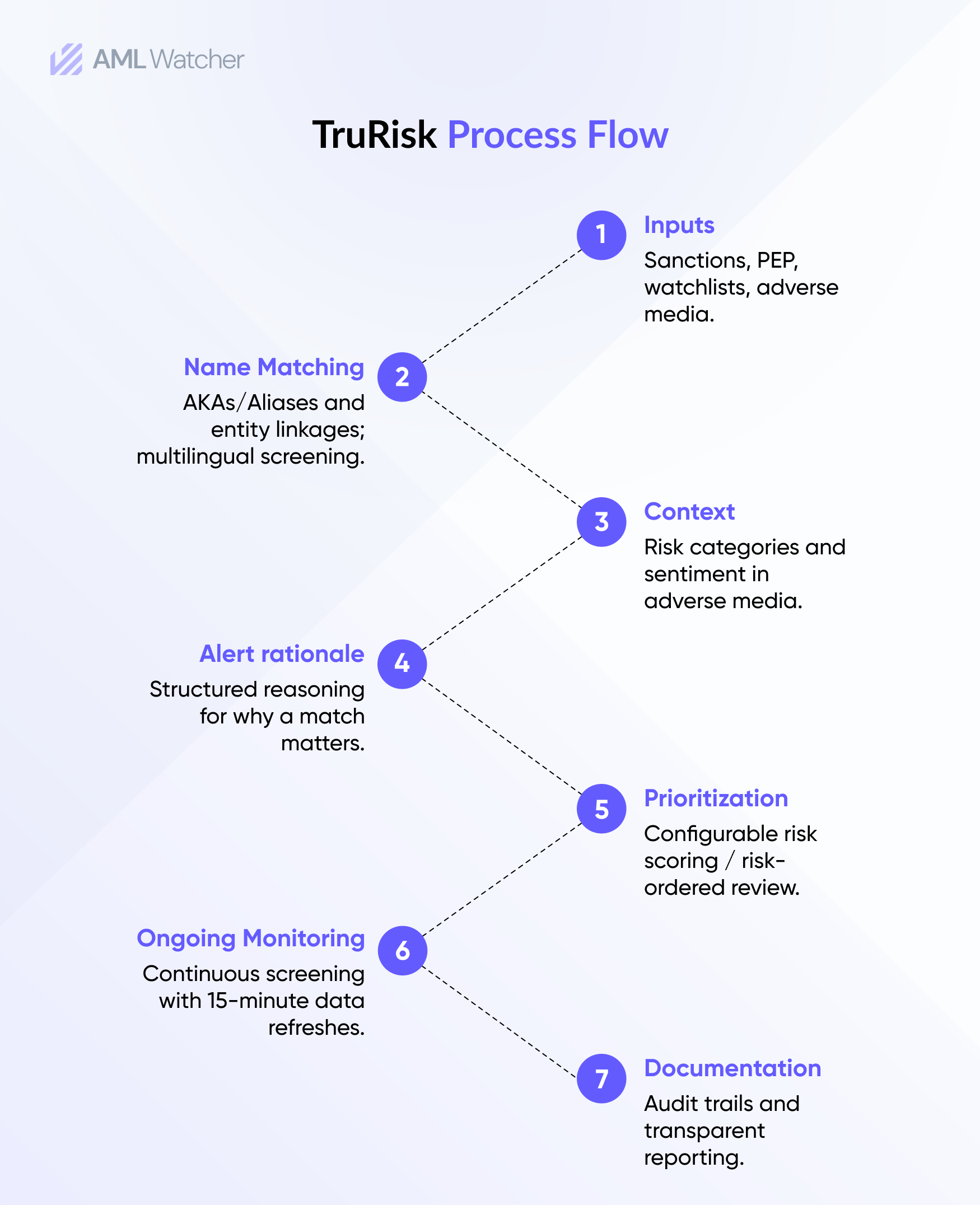
TruRisk AML has made it a direct challenge by utilizing the power of modern artificial intelligence (AI) to conduct intelligent AML screening. Watchlist matching and rules determine legacy screening. This is supplemented with learning models and entity resolution to minimize spurious matches in TruRisk. Here’s how it works:
1. Unique identifiers Reduce Mistaken Identity
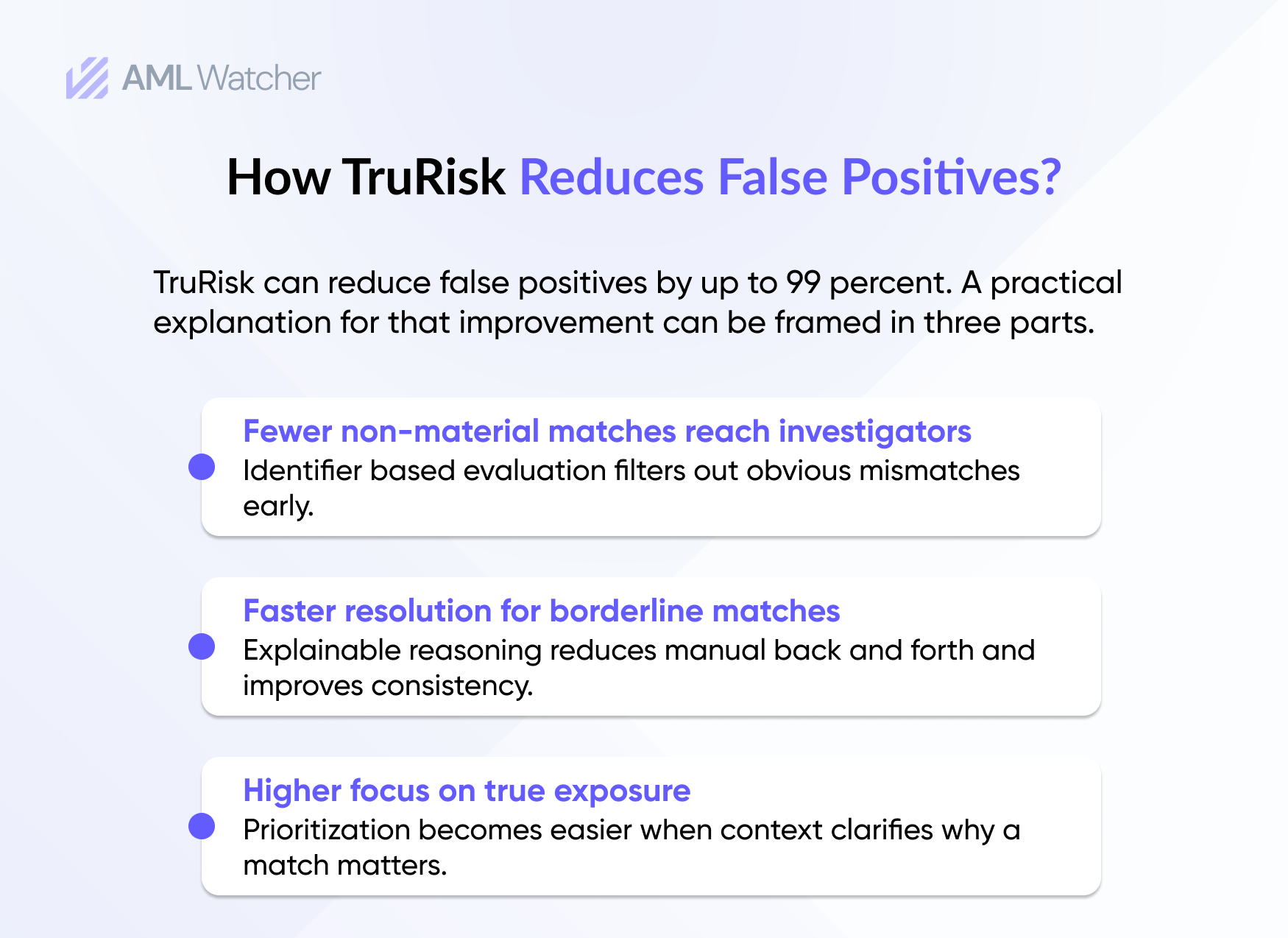
Name matching on its own is a blunt tool. TruRisk uses unique identifiers provided by the financial institution to distinguish true positives from false positives at the initial screening stage.
Examples of identifiers that commonly sharpen decisions include date of birth, nationality, address, and other customer details that can separate two similar profiles.
This matters because many false positives are not random. They are repeat patterns linked to common names and incomplete data. Identifier-based evaluation reduces the need for manual follow-ups for cases that were never a real exposure.
2. Context Helps Teams Focus on Exposure Rather Than Volume
TruRisk is introduced across screening applications, such as sanctions screening and adverse media screening.
In the case of sanctions screening, TruRisk allows teams to bypass clutter and locate the appropriate entity in real-time with predetermined unique identifiers. In the case of adverse media,TruRisk analyzes adverse media hits to separate the risk relevant to the background noise with the help of contextual indicators and specified risk indicators.
That shift is important. Relevance is what makes an alert worth time. Context lets the teams concentrate on the items that vary the risk decisions
3. Explainable Match Decisions Support Audit Readiness
A screening decision must have a justification. In its absence, a cleared match continues to pose risk in terms of audit, QA, or regulatory review. AI Agent also offers a rationale to each confirmed match and sums up the total matches along with the true positives to enable real-time reviews. It is a decision-led model where each search result is complemented by an evaluation that explains the rationale for the match, including cases where identifiers align precisely, and cases where identifiers do not align, and relevance is low. This explainability can be used to standardize the process of how decisions are recorded. It also minimizes the time that would have been taken to write down narratives from scratch.
Benefits of TruRisk AML for Compliance Teams
There are many advantages of the TruRisk AML implementation to the financial institution, especially in operations and compliance with regulations.
1. Time and Cost Savings
With the ability to eliminate false positives and automate most of the screening process, TruRisk saves the time and effort of manually screening. Compliance teams are able to prioritize their resources on the high-risk cases, which reduces the operational cost and effort.
2. Faster Decision-Making
Based on the TruRisk AML intelligent alerts and clear contextual explanations, compliance officers are able to make quicker judgments on suspicious activities. It accelerates the entire compliance procedure by prioritizing high-risk alerts and reducing time spent on non-material matches so the compliance teams can focus on real threats.
3. Enhanced Regulatory Compliance
TruRisk supports consistent recording and transparent reporting as requirements evolve. The system simplifies the compliance teams in making reports to the regulators and avoiding the risks of penalties as a result of non-compliance.
4. Scalability
The number of transactions that financial institutions have to screen will increase exponentially as they continue to grow and expand to new markets. TruRisk can process large data volumes while maintaining control effectiveness.
5. Best Alternative to Outdated Systems
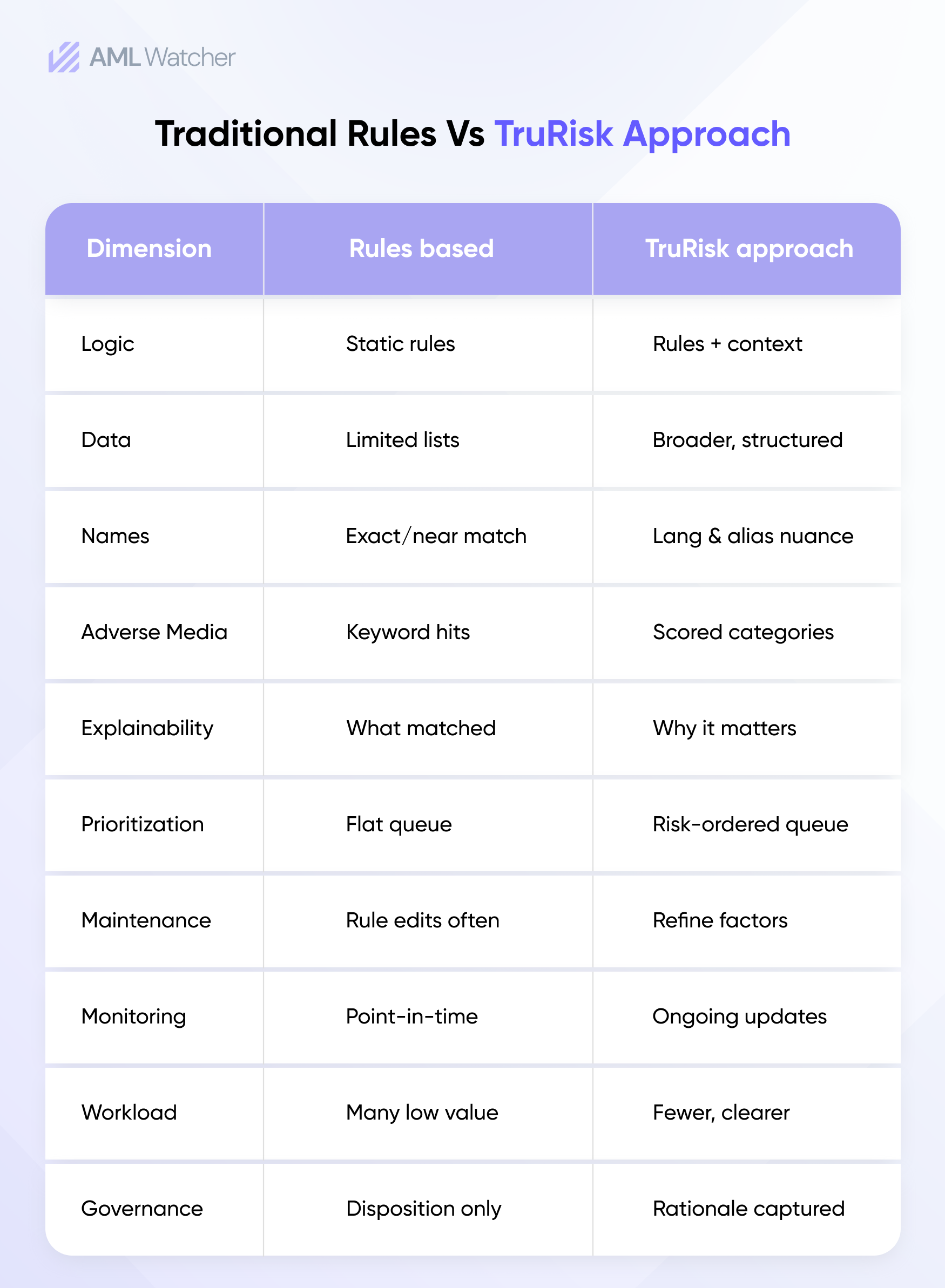
Rule-based AML systems usually fail to cope with the rising number of false positives and sophistication of transactions.
Instead, the TruRisk approach provides a contextual alternative to outdated screening. It learns from data, so that the compliance teams are not stagnated due to irrelevant alerts. This new method of screening AML is a major leap in ensuring compliance is not only more efficient but also more precise.
Evaluate Genuine Threats with AML Watcher’s TruRisk
The complexities of handling alert volume are obvious for analysts who need an intelligent solution that will minimize false alerts and improve productivity.
AML Watcher’s TruRisk offers a machine-learning solution that is intelligent and reduces false positives, along with improving compliance team efficiency. It enables FIs to concentrate on the most important things, spending their time on the prevention of financial crime by automating routine tasks and offering a deeper insight into suspicious activity.

- No commitment needed
- Complete AML Database at your service
- Access our all-in-one dashboard


Tier-2 PSPs in ... must demonstrate automated monitoring, layered CDD, &...
See the Full Regulatory Expectation70–80% less manual work, 95% less fatigue, TruRisk Agent makes compliance effortless.
Experience Agentic AMLMove Beyond Articles. Activate AML Intelligence.
Switch to AML Watcher today and reduce your current AML cost by 50% - no questions asked.
- Find right product and pricing for your business
- Get your current solution provider audit & minimise your changeover risk
- Gain expert insights with quick response time to your queries