


 Alert!

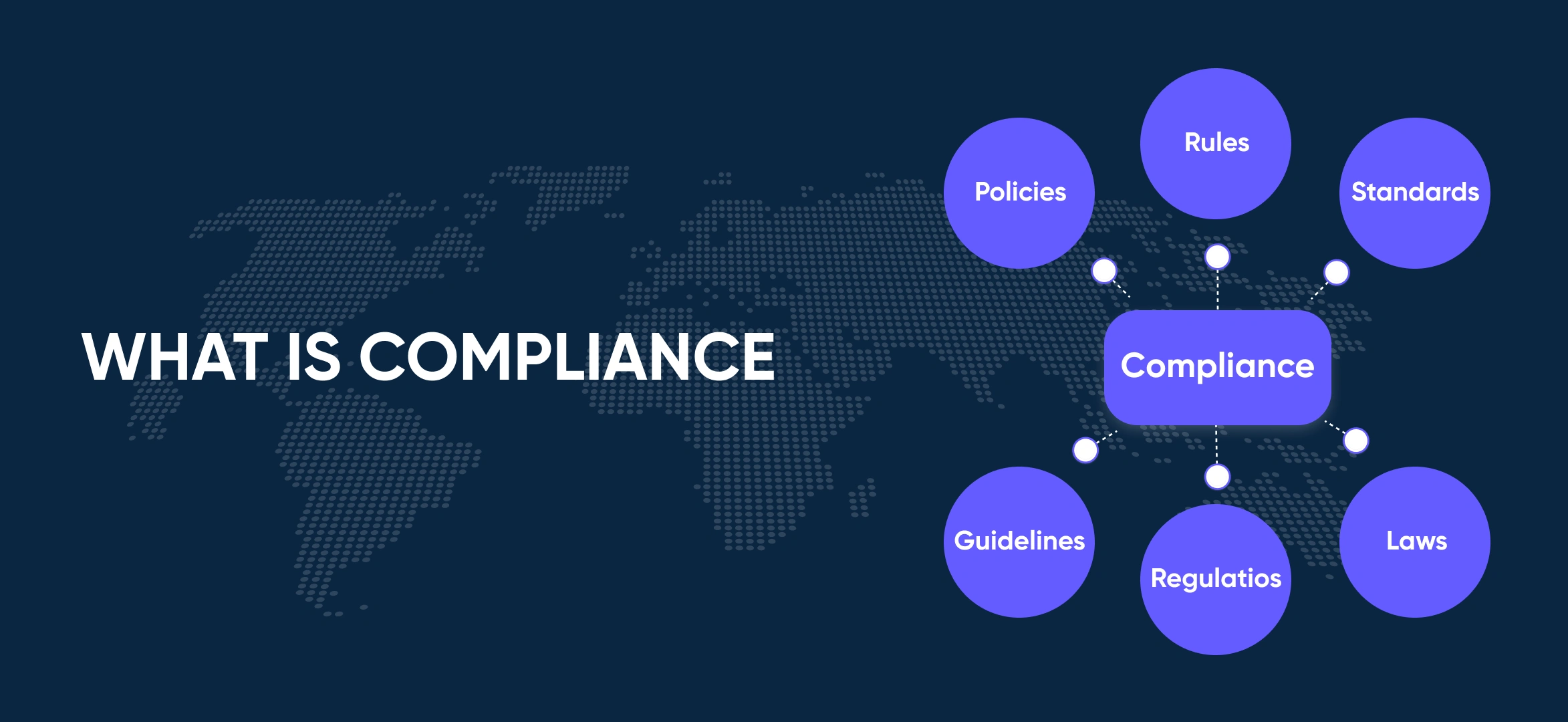
What is Compliance?
AML Compliance
January 14, 2026


Compliance is the difference between passing a regulatory review with confidence and scrambling to explain gaps in policies, controls, and customer checks. For regulated industries, compliance is not a one-time project. It is an operating model that proves a business follows the rules, documents decisions, and detects issues early enough to prevent harm.
One thing that remains constant in the crime landscape is its evolution in an effort to exploit loopholes in coded laws and regulations. For example, after the 11 September 2001 attacks the USA Patriot Act was passed to counter money laundering and terrorist financing that could lead to such incidents in the future.
Similarly, the Second EU AMLD of 2001 was an extension of the original 1991 directive, thus expanding its scope by moving beyond banks and including designated non-financial business and professions (DNFBPs).
What is Compliance and what it Means for Businesses?
Compliance in its literal dictionary definition means to follow the rules, laws and standards set by authorities, organizations or industry benchmarks in order to demonstrate adherence to applicable laws/regulations and rules.
In practice, compliance includes documented policies, customer and third-party checks, staff training, monitoring, reporting, and evidence that controls are working during audits and regulatory reviews.
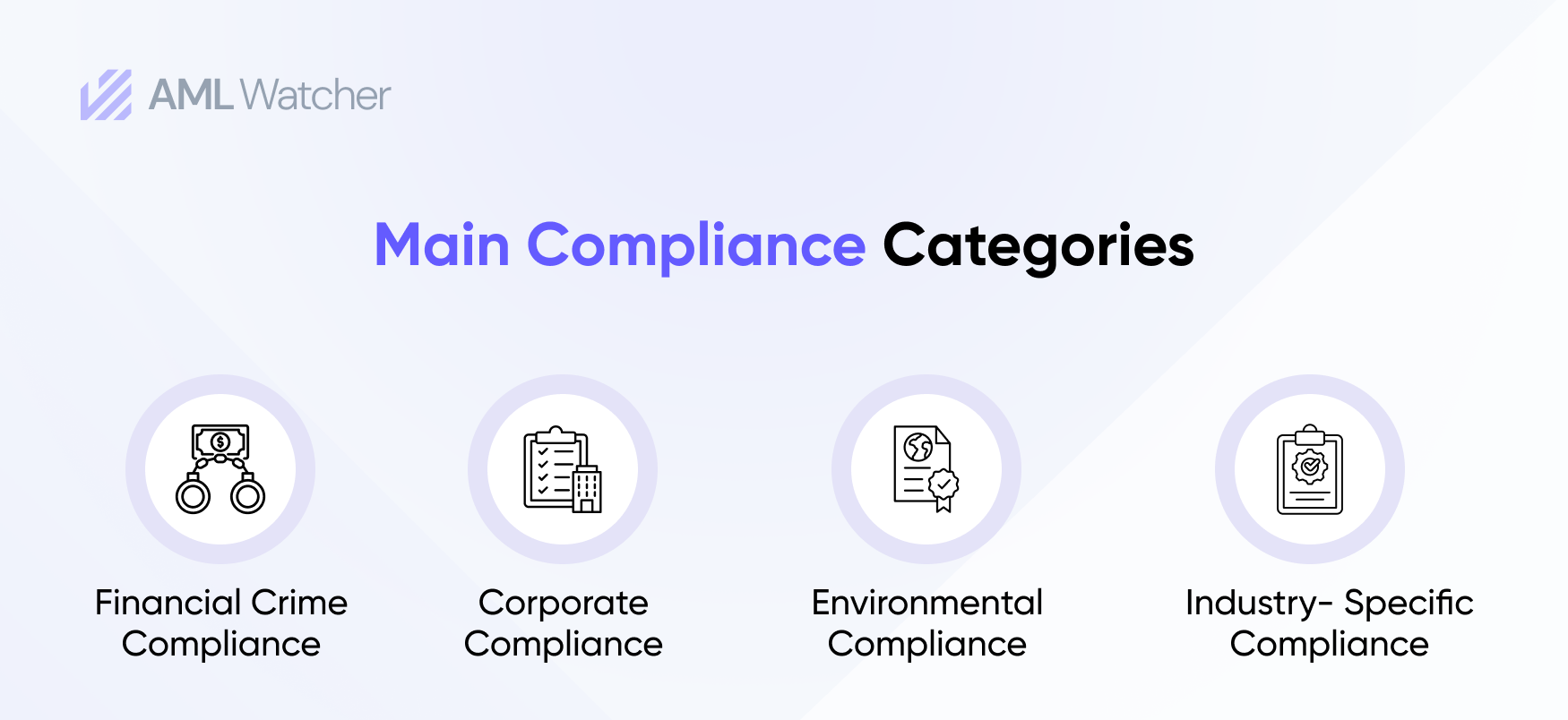
Main Compliance Categories
Compliance obligations differ by sector and risk profile of a specific business or industry. Following are the different types of compliance:
1. Financial Crime Compliance
It essentially indicates the duties, rules and laws that have been imposed by the governments and regulatory bodies like FCA, SEC, FinCEN etc. The EU AMLDs, Bank Secrecy Act, and the Sarbanes Oxley Act of 2002 are all examples of regulatory compliance that financial institutions and other relevant organizations must adhere to.
2. Corporate Compliance
Refers to the inner policies of a workplace this includes but is not limited to employee conduct, administrative ethics and adherence to HR policies. It also includes “whistleblowing” especially with reference to compliance programs where whistleblowing typically would cover fraud, breaches of law, policy or regulations.
3. Environmental Compliance
With the adverse effects of global warming on climate change, it is now mandatory on companies to ensure that their working or functioning does not harm the ecosystem in any way. This can include but again is not limited to emissions control, waste release control and smart, environment-friendly, lasting and sustainable sourcing.
4. Industry-Specific Compliance
As self-explanatory as its name, industry-specific compliance covers the relevant standards that are designed for those specific sectors like insurance, healthcare etc. It sometimes also includes rules and benchmarks set by relevant industry associations.
Which Industries Face the Most Regulations and Why?
The regulation requirements between industries can differ from one another meaning that some are more heavily regulated than most.
1. Banking Sector
The banking sector, fintechs and other financial institutions top the list for most heavily-regulated sectors this is because of exposure to financial crime risk, consumer protection concerns and systemic risks. The financial crisis of 2008 is a famous example of the systemic risk that resulted in wholesale reforms in the banking sector. Banks need to comply with AML regulations to identify, mitigate and report financial crime risks in the financial sector.
2. Healthcare Sector
It is a responsibility upon the shoulders of the healthcare sector to ensure the confidentiality of the patients’ sensitive information, safety standards and billing integrity. One such example is complying with HIPAA (Health Insurance Portability and Accountability Act) a US federal law that protects patients’ sensitive health information.
3. Insurance Sector
The insurance sector maintains market trust and credibility, ensures financial stability of the insurers; this results in the insurance sector becoming one of the most highly-regulated industries. Fraud risk, fairness of claims, and solvency issues are some of the reasons that drive regulations in the Insurance sector.
4. Capital Markets
Capital markets must comply with a range of regulations that are built to make sure that investor protection, market integrity, transparency and financial stability are all maintained. They are the largest source of financing for non-financial companies that typically include bonds, stocks, shares of investment.
They are required to license and register brokers, dealers, workers of securities exchange etc with appropriate authorities to operate. Further, they are expected to demonstrate maintenance of a minimum amount of capital and have enough financial resources to ensure stability.
The Ultimate Consequences of Non-Compliance
Laws, rules and regulations are all meant to be followed, however, in cases where following them is not prioritized the businesses/organizations have paid the ultimate price for their negligence. Regulatory fines have in many occurrences financially immobilized businesses/organizations.
Some relatively smaller violations can lead to suspension, revocation of licenses halting operations inevitably. The current status quo of the world is that of latest reviews and trends, therefore, opinions once lost can be lost for a long time and regaining trust can take up a lifetime of hard work and time.
Therefore, for any serious business or operations hoping to thrive and prevail for long times must be compliant to all relevant rules and regulations.
The Financial Conduct Authority fined Nationwide Building Society for 44 million pounds in December, 2025. The Nationwide Building Society between the period of 2016 to 2021 had ineffective systems for keeping up-to-date due diligence and risk assessments for its personal current account customers and for monitoring their transactions.
How AML Watcher Helps Financial Institutions Cut Compliance Costs
Financial institutions continue to absorb rising AML compliance costs driven by high alert volumes, manual screening reviews, and slow onboarding decisions.
AML Watcher’s TruRisk prioritises alerts that are based on risk and separate any possible false matches in screening results. Moreover, it supports structured reasoning that explains why an alert is considered a false positive. This particular feature, reduces unnecessary manual reviews, assists compliance teams to focus on genuine risk exposure, and shortens alert review and onboarding timelines through faster, well-documented decisions.
Request a demo to understand how AML Watcher helps financial institutions lower AML operational costs while maintaining defensible, regulator-ready compliance outcomes.
- No commitment needed
- Complete AML Database at your service
- Access our all-in-one dashboard


Tier-2 PSPs in ... must demonstrate automated monitoring, layered CDD, &...
See the Full Regulatory Expectation70–80% less manual work, 95% less fatigue, TruRisk Agent makes compliance effortless.
Experience Agentic AMLMove Beyond Articles. Activate AML Intelligence.
Switch to AML Watcher today and reduce your current AML cost by 50% - no questions asked.
- Find right product and pricing for your business
- Get your current solution provider audit & minimise your changeover risk
- Gain expert insights with quick response time to your queries


