


 Alert!

How Has Sanction Screening Software Evolved Throughout History?
Sanctions
August 5, 2024


As per the recorded human history, the idea of sanctions goes back to ancient Greece when in 432 BCE, Athens (the birthplace of Socrates, Plato, Sophocles, Aristophanes, and many other prominent politicians, writers, and philosophers of the ancient world) imposed a trade embargo on the city-state of Megara, setting up a precedent for the modern economic sanctions.

The early 20th century witnessed multilateral use of sanctions. Sanctions were used as a foreign policy toolkit to bring peace and stability in post WWI Europe.
Following the invasion of Ethiopia by Italy and France by Germany, sanctions became a means to punish states for breaking international laws and declaring unprovoked wars by the League of Nations.
Since then, sanctions have evolved from ancient trade embargoes to a sophisticated instrument of modern foreign policy.
Back then, the idea of sanction screening softwares was not relevant because the governments’ sanctions lists were the main source of information for manually cross-referencing the sanctions.
The only difference between the application of sanctions in the ancient world and today is the employment of technology.
Find out how modern technology differs.
With the advancement of digital tools, the process of sanction screening became reliant on manual screening, which required cross-checking business interactions and transactions against sanction lists manually.
By the early 2000s, sanction screening had been automated. Basic design of compliance tools allowed financial firms to quickly cross check names and their background information.
Following 9/11, screening technologies became more sophisticated in order to keep up with increasingly stringent financial regulations around the world due to international efforts to prevent terrorist acts, disrupt funding networks, and prevent money laundering.
The recent years have witnessed the integration of machine learning (ML) and artificial intelligence (AI) in the anti-money laundering compliance tools which resulted in decreased false positives and massively enhanced the detection of suspicious activities.
Therefore, sanction screening solutions have become a modern blessing by the financial industry to save themselves from millions of regulatory fines.
Sanction screening tools are designed to make sure financial firms do not provide financial services like fund transactions with organizations, countries or individuals sanctioned by the international community.
Given the intricate sanction ecosystem in today’s multipolar world order, the AML screening solutions available in the regtech market are designed in a way that provides customized sanction screening systems according to the given jurisdiction.
Those tools made the process of compliance protocols in the regulated industry more smooth and efficient than ever before.
How to Conduct Real-Time Sanctions Screenings in Payments?
As international regulatory bodies, government agencies and law enforcement organizations pass new regulations to combat financial crimes and global compliance, they also target individuals, countries and sometimes organizations with new regulations to prevent financial crimes by preventing the flow of funds in the international financial systems in the disguise of legitimized business.
Therefore, sanction screening in patents meant transaction monitoring and preventing criminals from employing legitimate monetary systems.
Why is it important to conduct screening processes?
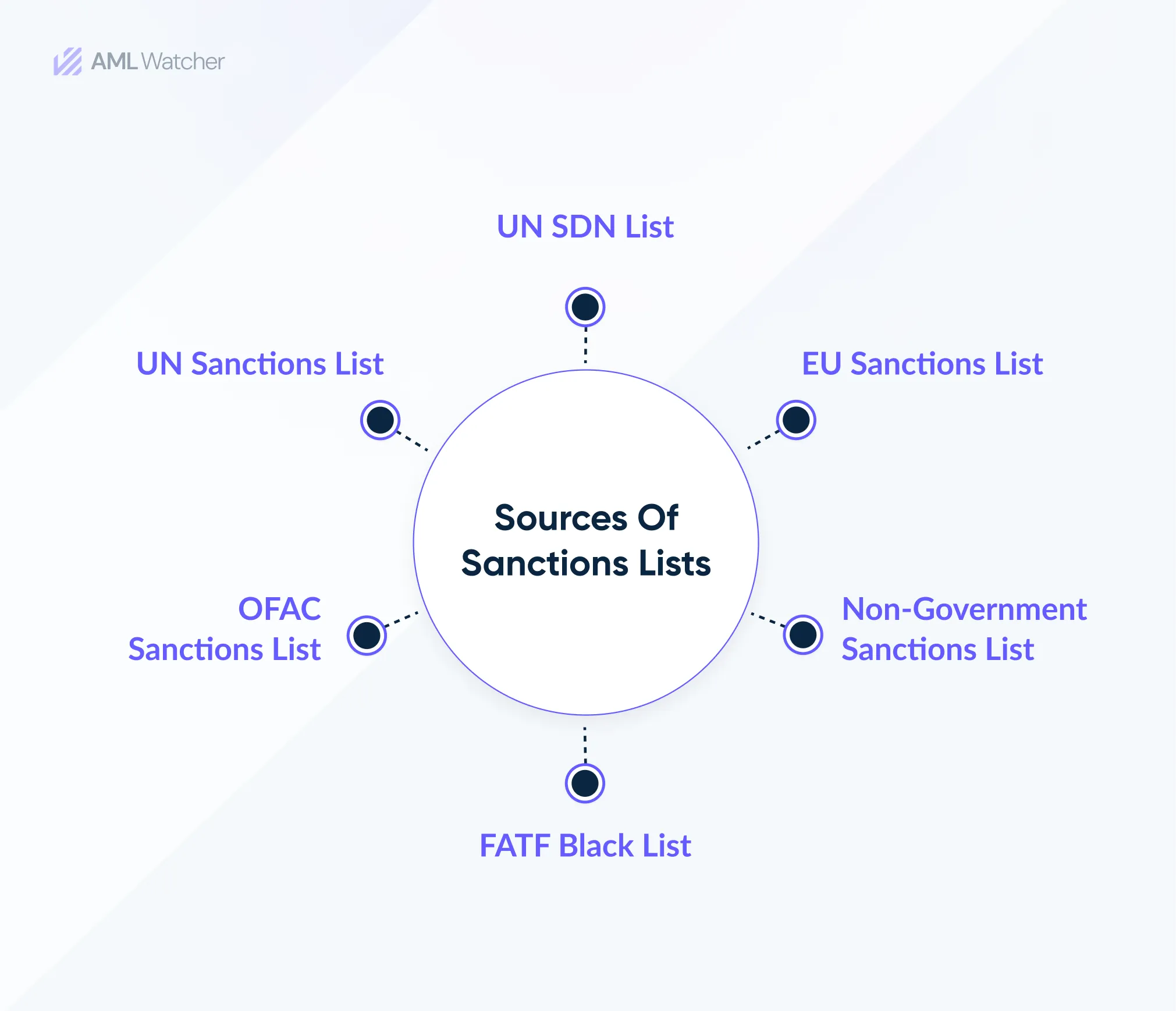
As part of the screening process, a payment service provider checks the gathered information of a client initiating the transaction against numerous sanction lists including SDN list, EU consolidated list and many more.
Equipped with advanced technology, AML solutions must be autonomously regulated to reflect the real time changes in regulations and sanctions list updates.
Advanced algorithms and quick regulation with developing trends in becoming the new in demand component of AML Sanction screening technology to improve efficiency and accuracy.
How to Mitigate False Positives and Escalation?
Given the amount of transactions in the financial industry, most anti-money laundering solutions end up with a huge number of false positives.
Most of these false positives are usually incorrectly flagged as potential risk. Therefore, a robust anti-money laundering program includes sanction list screening software that recheck the false alarms and differentiate between the actual threats from the false alarms. .
Can Global Coordination Help with Improved Sanction Screening?
As financial transactions get global, PSP (payment service providers) must be able to work in collaboration to mandate screening steps to avoid money laundering.
Apart from sanctions screenings, institutions may conduct due diligence on their customers (known as Know Your Customer or KYC) to verify they are not dealing with sanctioned companies.
This includes constant surveillance of consumer activity to identify possible risk indicators.
How Do Sanctions Screening Solutions Work?
The best sanctions screening software use sophisticated techniques to ensure that organizations are properly and precisely screened against relevant lists.
Here’s an overview of how these solutions usually operate:
How Integration and Data Import Is Crucial for Effective AML Screening?
Regtech solution providers have access to the financial firm’s anti-money laundering systems monitoring data transaction and the verifications of clients background data.
This is a basic due diligence process that necessitates the access to the client’s addresses, names and other key information.
Why List Management and Updating is Essential?
Given the evolving geopolitical landscape, the sanction lists released by the international organizations and government agencies get updated on a regular basis.
Therefore, the sanction screening softwares offered by the regtech solutions has an inbuilt feature that refreshes and updates these lists as per the updates released by the domestic regulatory organizations and transnational organizations like the United Nations.
How False Positives are Reduced by Screening and Matching Algorithms?
Most solutions today offer a double check feature to verify transaction data of clients against the ever-changing sanctions lists.
The screening softwares especially takes into account the aliases, spelling variants and other confusing elements of a clients data.
How Alerts and Case Management Helps Avoid Further Trouble?
In the world of compliance, false positives are as common as financial crimes . Therefore, alerts are generated and thorough reviews are essential to make sure the match is legit.
Reporting and Record-Keeping
The solution keeps a record during the audits and inspections and logs of all screening processes including the conclusions made by the compliance officers, authentic matches etc.
Why Training & Awareness Is Crucial?
Now more than ever, it’s crucial for the financial firms to sensitize their staff regarding the importance of complying with sanction screening and avoiding regulatory fines.
Their familiarity with the compliance resources and processes can allow firms to avoid millions of hefty fines.
Therefore regular training is undeniably necessary to keep the staff upgraded with the evolving regulatory landscape.
Financial firms should benefit from the upgraded real time sanctions screening tools to successfully navigate the complex landscape of global financial sanctions, avoiding providing financial services to individuals sanctioned by foreign governments. Sanction screening tools help to execute thorough due diligence, mitigate legal risks and maintain corporate integrity to prevent money laundering.
Also Read: Sanction Screening Service to Prevent Customer Fraud
- No commitment needed
- Complete AML Database at your service
- Access our all-in-one dashboard


Tier-2 PSPs in ... must demonstrate automated monitoring, layered CDD, &...
See the Full Regulatory Expectation70–80% less manual work, 95% less fatigue, TruRisk Agent makes compliance effortless.
Experience Agentic AMLMove Beyond Articles. Activate AML Intelligence.
Switch to AML Watcher today and reduce your current AML cost by 50% - no questions asked.
- Find right product and pricing for your business
- Get your current solution provider audit & minimise your changeover risk
- Gain expert insights with quick response time to your queries