

 Alert!

Why Sanctions Screening Fails and How to Strengthen Compliance
Sanctions
Aug, 07 2026
January 2, 2024


Apple Inc. agreed to pay $466,912 to the U.S. Office of Foreign Assets Control (OFAC) after its sanctions screening process failed to identify a blocked entity because of a name mismatch. The case demonstrates how even a minor screening gap can expose financial institutions to regulatory penalties.
Sanctions regulations continue to evolve as geopolitical events reshape global enforcement priorities. The sanctions introduced following the Russia-Ukraine conflict expanded both the number and complexity of designated individuals and entities, making accurate sanctions screening more difficult. Organizations now require screening solutions capable of identifying spelling variations, legal entity suffixes, aliases, and multilingual records.
Apparently in violation of FNKSR § 598.203, Apple was found to be facilitating the interests of a Slovenian software enterprise (SIS, d.o.o.), which was blacklisted as a foreign narcotics trafficker on the OFAC Specially Designated Nationals and Blocked Persons (SDN) list. According to OFAC, Apple’s screening system failed to recognize “SIS d.o.o.” as equivalent to “SIS DOO.” Because “d.o.o.” is the Slovenian equivalent of a limited liability company, the mismatch prevented the sanctioned entity from being identified during screening.
The incident highlights why sanctions screening must evolve alongside changing regulations and increasingly sophisticated financial crime risks.
Global Sanctions Regulations Continue to Expand
Sanctions are imposed to restrict individuals, organizations, and jurisdictions involved in activities such as terrorism financing, weapons proliferation, corruption, narcotics trafficking, and other threats to international security. Authorities, including OFAC in the United States, OFSI in the United Kingdom, the European Union, and the United Nations, regularly publish and update sanctions lists that financial institutions must screen against.
Businesses that fail to comply with sanctions requirements may face financial penalties, regulatory enforcement actions, operational restrictions, and reputational damage. Regulators also expect businesses to implement effective sanctions compliance programs supported by reliable screening controls.
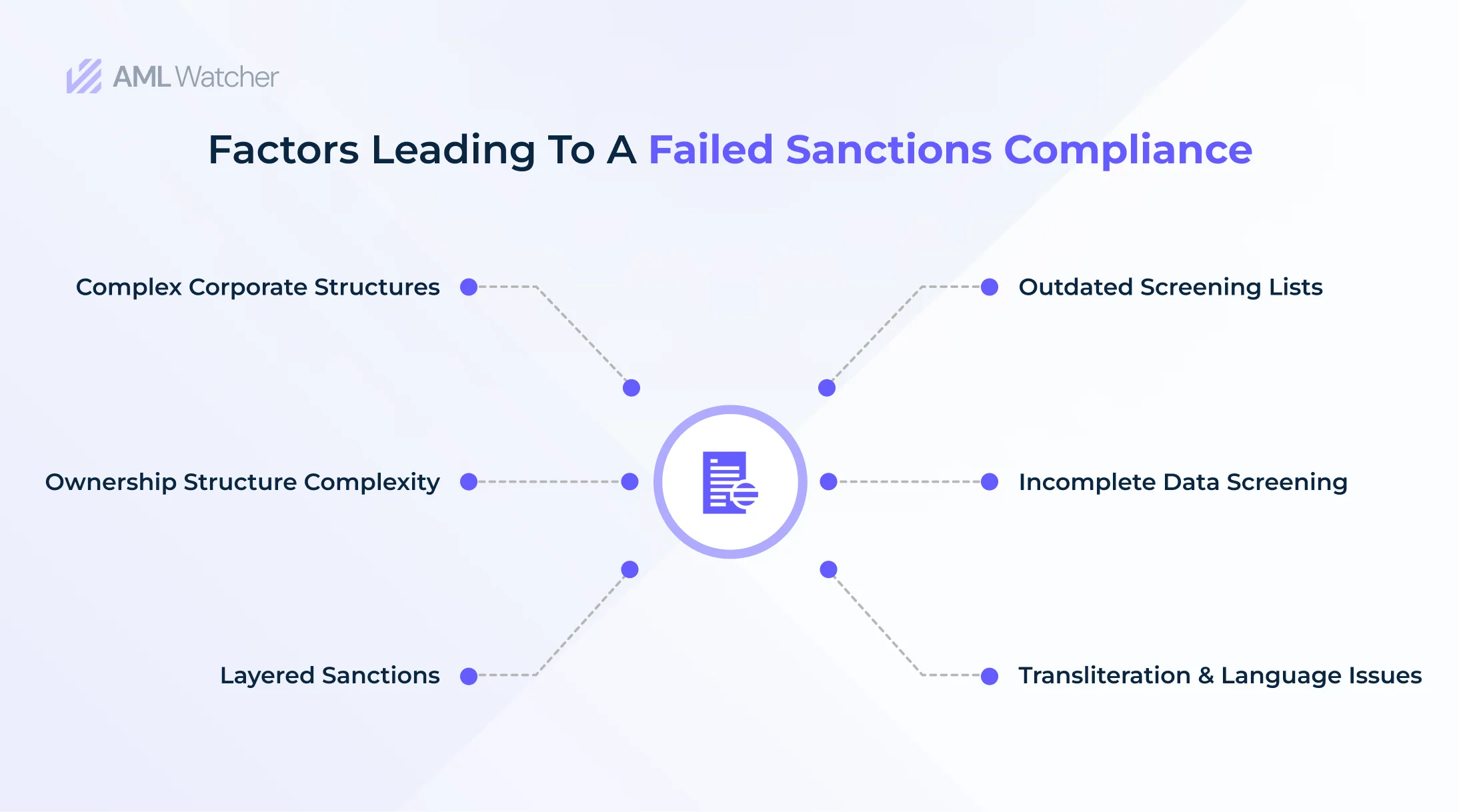
OFAC’s Framework for Compliance Commitments highlights the importance of maintaining effective screening controls, investigating potential matches, and applying a risk-based approach to sanctions compliance. Reducing unnecessary false positives while identifying genuine sanctions matches remains one of the biggest operational challenges for compliance teams.
Recent OFAC enforcement actions involving firms such as Bittrex demonstrate that regulators continue to penalize weaknesses in sanctions compliance programs, particularly where compliance teams fail to implement effective screening and monitoring controls.
In the United Kingdom, firms subject to sanctions regulations are expected to implement proportionate sanctions screening controls to identify designated persons and comply with asset freeze obligations. Although legislation does not prescribe a specific screening technology, regulators expect businesses to maintain effective sanctions compliance controls.
The Cost of Weak Sanctions Screening
Following Russia’s invasion of Ukraine, the United States and its allies expanded sanctions programs targeting individuals, entities, financial institutions, and strategic industries. These developments increased compliance expectations for financial institutions operating across international markets. The expanded sanctions framework requires financial and non-financial organizations to strengthen customer screening, transaction monitoring, and ongoing sanctions compliance. As a result, regulated entities are expected to implement effective screening measures to identify sanctioned entities before engaging in business with them.
The table below highlights major OFAC enforcement actions and the financial consequences of sanctions compliance failures.
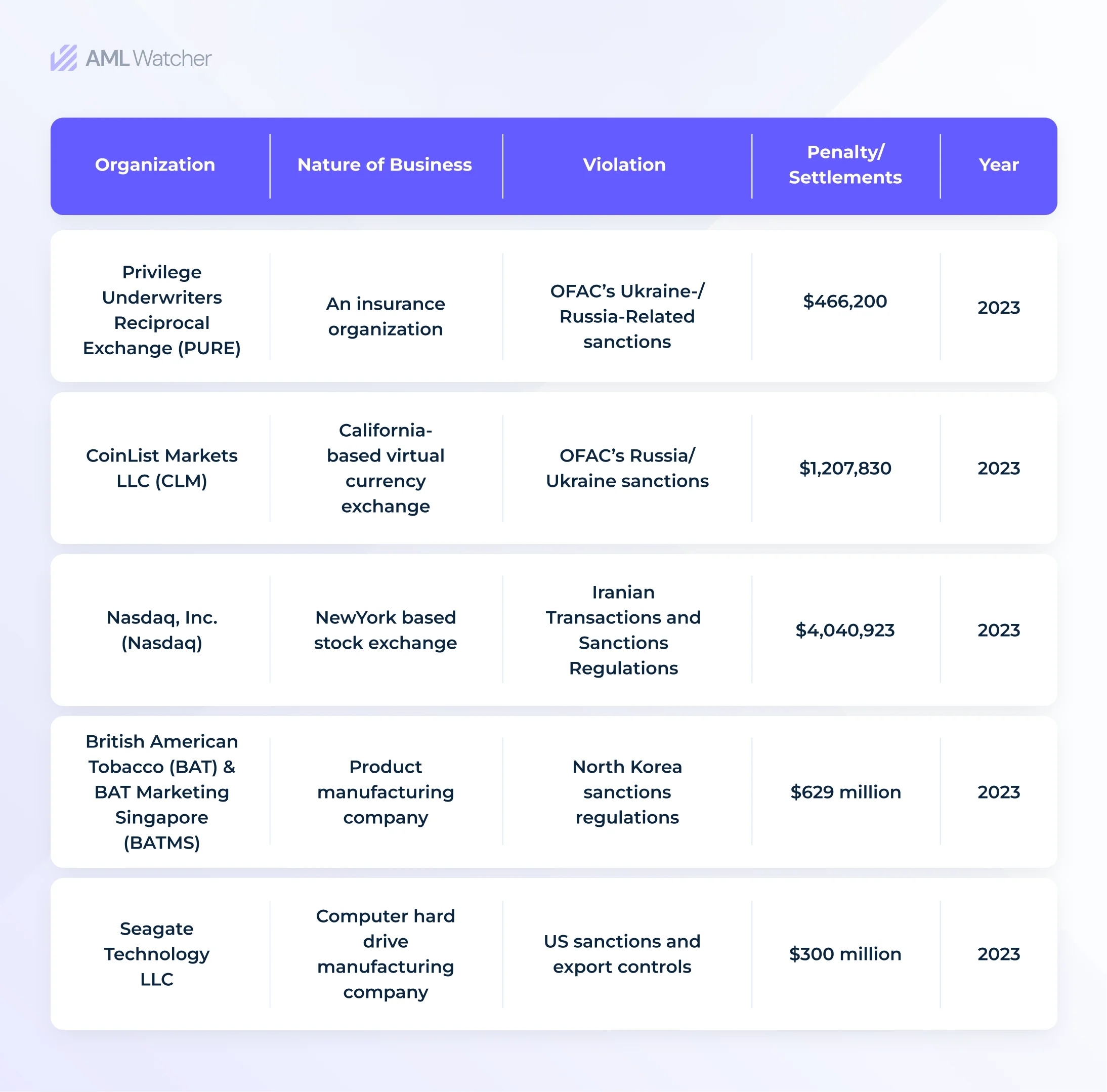
These enforcement actions highlight the capabilities financial institutions should look for when selecting a sanctions screening solution. Understanding these enforcement actions helps businesses identify the capabilities modern sanctions screening solutions should provide.
Common Challenges in Sanctions Screening
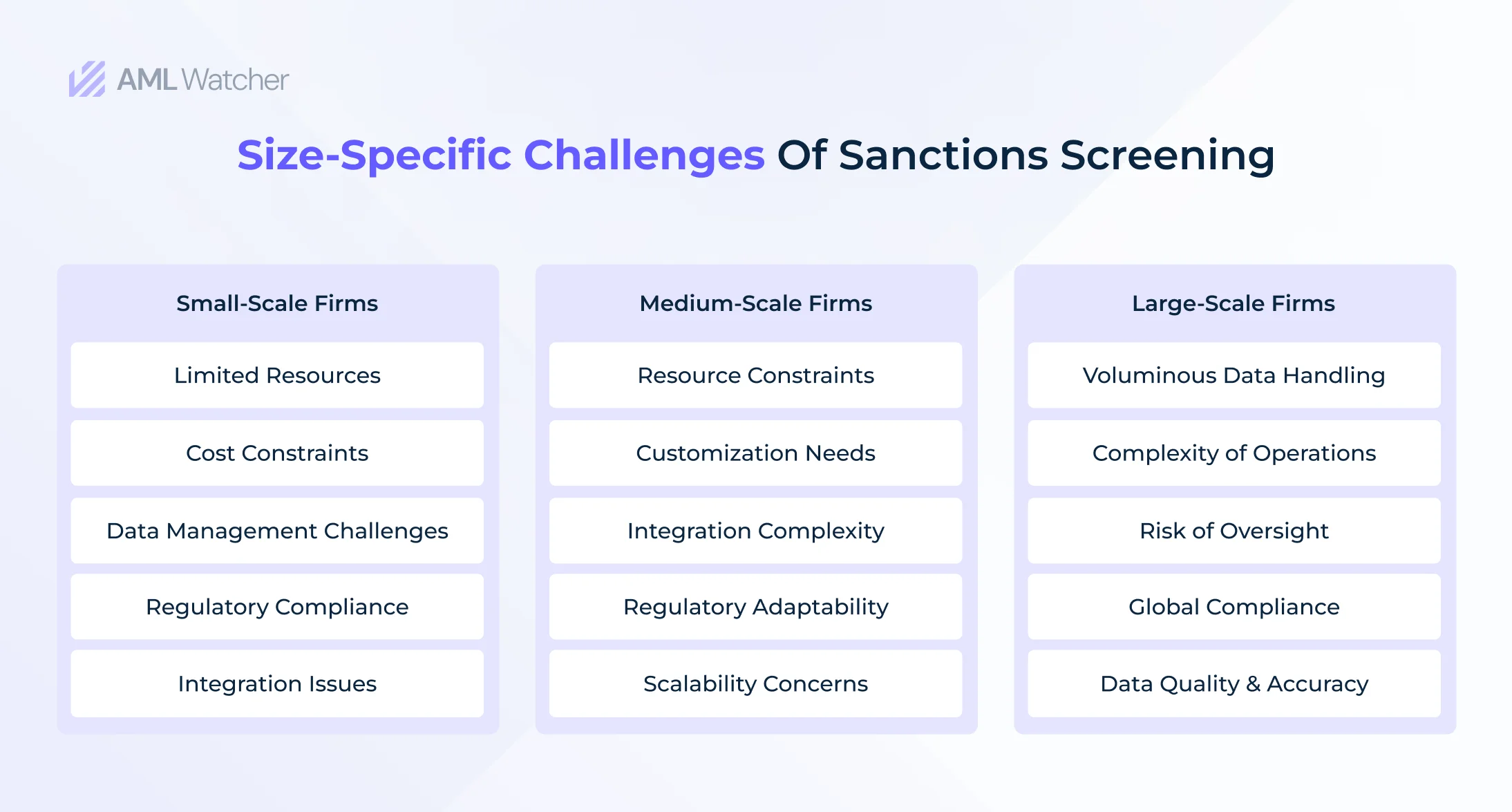
Modern sanctions screening extends beyond checking names against a sanctions list. Organizations must identify sanctioned individuals despite spelling variations, aliases, language differences, and constantly changing sanctions programs. The following challenges frequently reduce the accuracy and efficiency of sanctions screening.
False Positives and Alert Fatigue
Sanctions screening systems often generate large numbers of potential matches that require manual review. While many of these alerts are ultimately cleared as false positives, they consume valuable compliance resources and slow customer onboarding. Organizations need screening solutions that balance detection accuracy with intelligent matching to reduce unnecessary investigations.
Name Matching and Transliteration
Differences in spelling, transliteration, legal entity suffixes, and regional naming conventions make sanctions screening far more complex than simple exact-name matching. A sanctioned individual may appear under multiple spellings or languages, while organizations can be listed using different legal abbreviations. Screening solutions must account for these variations without creating excessive false positives.
Apple’s OFAC enforcement action demonstrates how a seemingly minor difference in a legal entity suffix can prevent a sanctioned entity from being identified. Screening systems must recognize naming variations across jurisdictions to reduce this type of compliance risk.
Alias Detection and Fuzzy Matching
Sanctioned individuals and entities frequently use aliases, alternative spellings, abbreviations, and translated names. Advanced screening solutions use fuzzy matching algorithms to identify likely matches that traditional exact-name searches could overlook. Properly configured matching thresholds help improve detection while minimizing unnecessary alerts.
Data Quality and Sanctions List Updates
Screening accuracy depends heavily on the quality and timeliness of sanctions data. Delayed updates, incomplete records, or inconsistent data formats increase the risk of missed matches. Organizations should use screening providers that continuously monitor official sanctions authorities and update their datasets as regulatory changes occur.
Cross-Border Compliance
Organizations operating internationally must comply with sanctions issued by multiple authorities, including OFAC, OFSI, the European Union, the United Nations, and other national regulators. Differences between sanctions regimes make it difficult to maintain consistent compliance across jurisdictions without centralized screening processes.
Ongoing Monitoring
Sanctions compliance does not end after customer onboarding. Individuals and organizations may be added to sanctions lists at any time, making continuous monitoring essential. Ongoing screening helps organizations identify newly designated customers and respond quickly to regulatory changes throughout the business relationship.
Meeting Regulatory Expectations
Regulators increasingly expect organizations to maintain documented sanctions compliance programs supported by appropriate governance, risk assessments, screening controls, and independent testing. An effective screening solution should support these broader compliance obligations rather than simply checking names against sanctions lists.
How AML Watcher Supports Effective Sanctions Screening
Financial institutions need sanctions screening solutions that combine reliable data, configurable workflows, and continuous monitoring. AML Watcher helps businesses strengthen their sanctions compliance programs while helping compliance teams improve screening accuracy and reduce manual workload.
Diverse and Continuously Updating Databases
Overcoming the credibility and relevance challenges businesses face, AML Watcher empowers your screening measures with up-to-date, independently maintained sanctions datasets from 235+ countries and their jurisdictions, helping you identify sanctioned individuals and entities more accurately.
Customized & Proficient Screening Process
Customized settings and screening protocols embedded in our tool enable medium- to small-scale firms to choose a reliable, configurable, and scalable screening solution while remaining compliant with global sanctions regulations. The application of fuzzy matching in the screening algorithm reduces manual reviews and improves screening efficiency by reducing the need to address large volumes of false positives, enabling compliance teams to focus on higher-risk investigations.
Aligned with Global Sanctions Regulations
AML Watcher continuously monitors sanctions list updates from global authorities and automatically incorporates changes into its screening data. This helps organizations respond to expanding sanctions requirements without relying on manual list management.
Effective sanctions screening requires more than checking names against a watchlist. Compliance teams need accurate data, intelligent matching capabilities, and continuous monitoring to keep pace with global sanctions regulations. AML Watcher combines comprehensive sanctions data, configurable screening workflows, and real-time monitoring to help organizations strengthen sanctions compliance while reducing operational risk.
- No commitment needed
- Complete AML Database at your service
- Access our all-in-one dashboard


Tier-2 PSPs in ... must demonstrate automated monitoring, layered CDD, &...
See the Full Regulatory Expectation70–80% less manual work, 95% less fatigue, TruRisk Agent makes compliance effortless.
Experience Agentic AMLMove Beyond Articles. Activate AML Intelligence.
Switch to AML Watcher today and reduce your current AML cost by 50% - no questions asked.
- Find right product and pricing for your business
- Get your current solution provider audit & minimise your changeover risk
- Gain expert insights with quick response time to your queries