Alert!

AML Strategies for BNPL Companies
AML/CFT
March 2, 2026


- What is the BNPL Model and what does BNPL stand for?
- How does BNPL work?
- Why Fraud is the Biggest threat for BNPL Services
- Regulatory Guidelines for the BNPL Sector in Saudi Arabia
- How AML Checks Help BNPL Services Prevent Fraud Losses
- The Best and Effective AML Practices for BNPL Companies
- How AML Watcher Strengthens Fraud Prevention for BNPL Providers

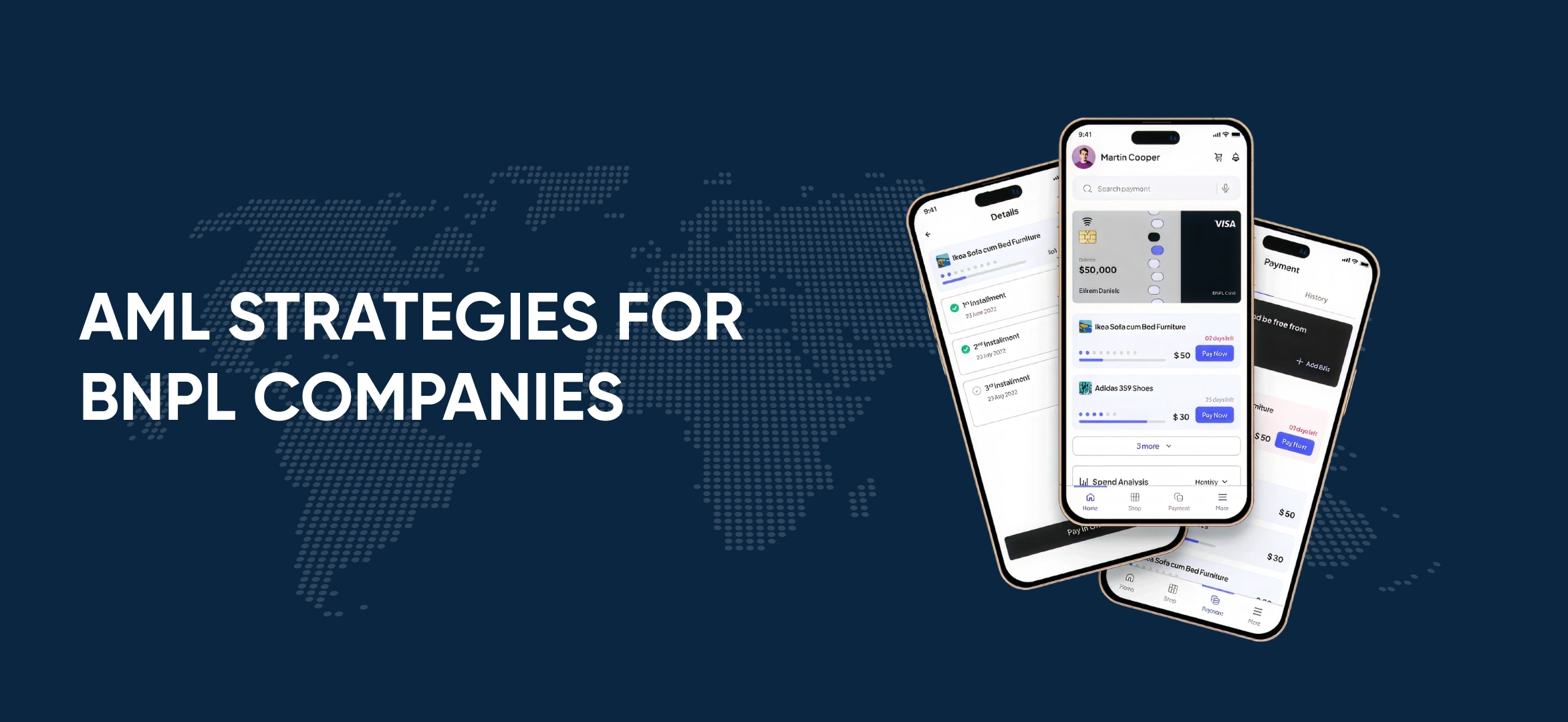
The current economic environment is seeing a growing trend toward the adoption of the “buy-now-pay-later”mindset. The Buy Now Pay Later Model (BNPL) brings a transformative change to the vast horizon of online shopping.
The market is further expected to grow especially after the execution of interest-free installment plans on e-commerce platforms.
The BNPL model gained prominence during the Corona virus pandemic of 2019 and there has been no stopping its popularity since then. The rise of BNPL has also attracted fraudsters who want to use BNPL service with no intention to pay back. These challenges can be addressed by robust AML and KYC practices in the BNPL sector.
What is the BNPL Model and what does BNPL stand for?
BNPL or Buy-Now-Pay-Later is an emerging financing option. In order to understand a BNPL model it is important to understand the three key players that form the structuring of it, the service providers, the merchants and the end consumers.
How does BNPL work?
The BNPL service provider at the time of transaction pays the full cost of the service. Afterwards, the BNPL service provider and the consumer establish a payment contract. This method basically gives the consumer a sense of relief since the installments can be paid over a duration of time up to the consumer’s discretion.
The interest rate for this mode of payment is also minimal or zero. This remained consistently popular amongst the younger generations, highlighting a prominent shift in the consumer buying pattern.
While the BNPL model’s flexibility is ideal for consumers it has also emerged as a safe haven for merchants who have seen a wider range of customers that paved the way for better and bigger opportunities for them. Seeing the rapid pace of the BNPL model’s growth it has become more commonly implemented by e-commerce platforms and fintech companies.
Why Fraud is the Biggest threat for BNPL Services
BNPL service providers are an easy target for fraudsters, due to simplified payment plans and highly automated nature of approval process for BNPL transactions.
According to recent research, the Buy Now Pay Later market size accounted to be USD 23.37 billion in 2025 the research further predicted its increase to 28.44 billion USD in 2026 to USD 83.36 billion USD in 2034.
The BNPL sector is relatively nascent, that is why it is prone to have lax AML and KYC controls. In recent years some major players from the sector have been subjected to scrutiny.
Banks and credit card companies have systemic, coherent and standardized eligibility criteria. If an applicant does not meet those criteria, the transaction/loan rarely gets approval.
BNPL services exist because banks would not finance the purchase of those products, and even if they do so the process is very lengthy. This is where BNPL comes in with simple automated criteria, so customers do not have to wait for credit approvals.
BNPL providers in comparison don’t apply such strict scrutiny; they have their own in-built algorithms to identify the financial competency of the customers. This level of automation intended to provide quicker approvals to legitimate customers, makes it highly vulnerable to “never pay fraud” attempts.
The BNPL sector is starting to be regulated in different countries around the globe, under AML and licensing requirements. One such example is that of Saudi Arabia, where BNPL companies are required to maintain compliance with AML laws and be licensed and supervised by Saudi Central Bank (SAMA), formerly known as Saudi Arabia Monetary Authority.
Regulatory Guidelines for the BNPL Sector in Saudi Arabia
1. Licensing and Capital Requirements
Companies need to obtain prior approval and license for engaging in BNPL related activities from SAMA. The minimum capital required for BNPL companies in Saudi Arabia is 5 million SAR.
2. Mandated to Adhere to AML/CTF Compliance
As per the Article 14 of Rules for Regulating BNPL, firms are obligated to comply with AML/CTF laws, the implementing regulations, and all relevant SAMA’s rules and instructions which should be implemented in accordance with the firm’s nature, size and risk.
3. Existence of written AML Policies
Article 13 of SAMA rulebook requires BNPL firms to have written organizational policies for AML/CFT, credit risk management, compliance, consumer data protection and approval procedures etc. This clause requires a 10-year long data retention for all consumer documents once the relationship ends.
4. Limited Cash Handling that Supports AML Controls
Cash collection for BNPL installments is strictly prohibited. The collections are to be strictly through electronic channels only, this results in limited anonymity risks and enhanced auditability.
How AML Checks Help BNPL Services Prevent Fraud Losses
BNPL service providers can defend their systems from fraudulent purchases by adopting comprehensive AML and KYC procedures without changing their simplified approval criteria.
There should be a verification system to ensure that all information given by the customers is correct and reliable. Verification ensures that only legitimate BNPL consumers pass through the approval process and once flagged identity can’t be used again to trick the system. Whereas adverse media checks alerts the system if a potential buyer has any prior allegations of fraud or financial misconduct.
The Best and Effective AML Practices for BNPL Companies
BNPL companies can avoid fraud and empower their security system against it. In order to do this, BNPL companies could adopt several key AML strategies.
1. Perform Regular Credit Evaluation
Evaluating the financial stability and the capability of a person to pay for the service they are trying to get can help identify who fits and meets the eligibility criteria. An analysis of factors like income, expenses and all other relevant financial details can really help BNPL service providers and streamline their work for them. The customers’ past payment behaviors and patterns can also provide a lot of insight into the nature of the customers’ past similar dealings.
2. Thorough Risk Assessment
BNPL providers can exercise more caution and further work on their risk assessment processes by taking up more information from the customer. They should perform comprehensive risk assessment by collecting customer identification details including network and device intelligence. This information then can help providers to assess if the potential customer has any history of being linked to “never pay fraud” or chargebacks.
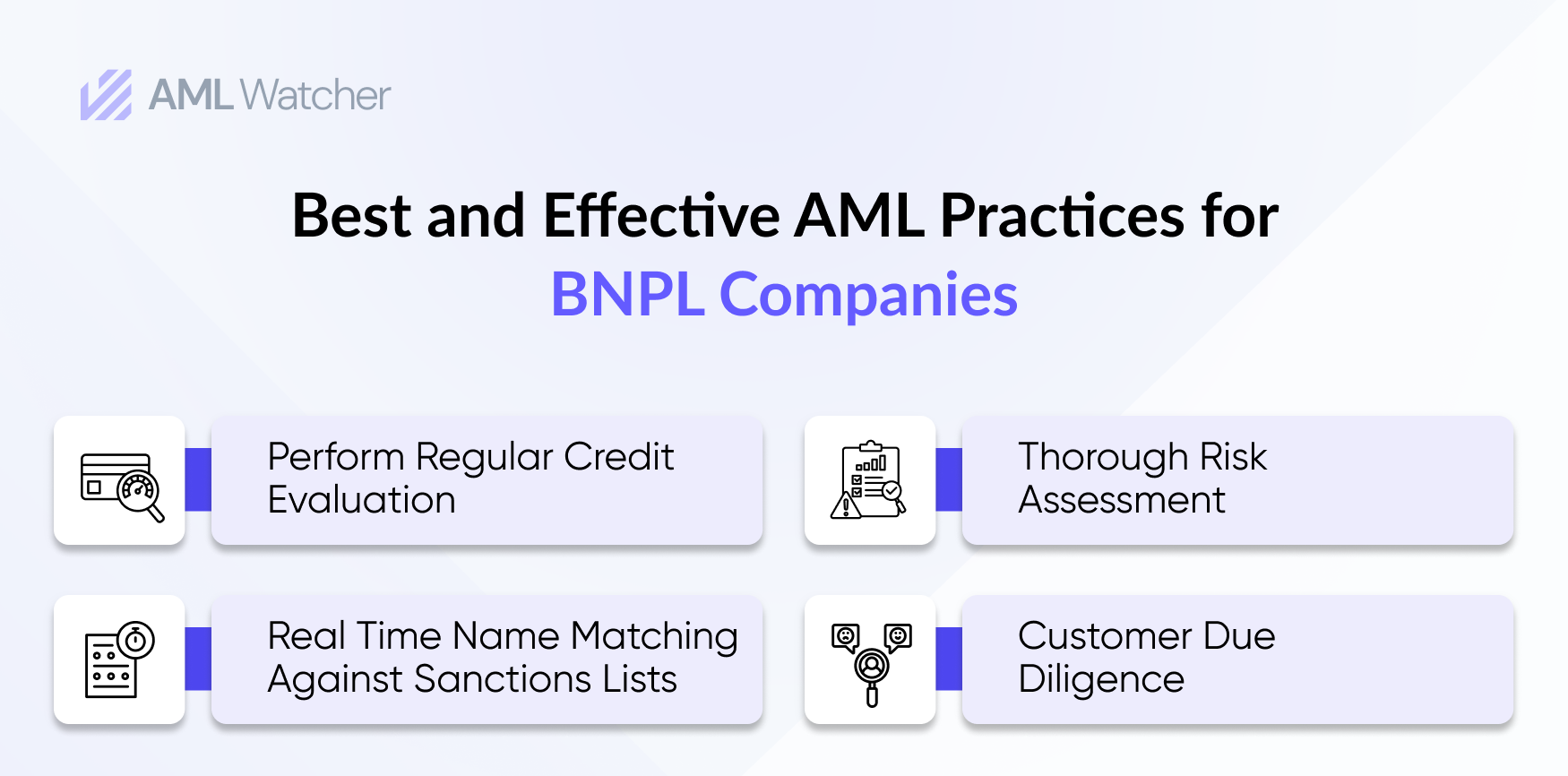
3. Real Time Name Matching Against Sanctions Lists
BNPL companies should match names of their potential customers against sanctions lists in real time since the sanctions landscape is subject to consistent changes. Weak monitoring with sanctions can result in missing links to sanctioned entities, resulting in potential enforcement actions.
4. Customer Due Diligence
During onboarding thorough customer due diligence must be declared obligatory by BNPL service providers. If any high-risk customers are identified they should be subjected to enhanced due diligence initiatives that require detailed selection.
BNPL companies should also obtain and retain copies of identification documents for future investigation or auditing purposes. Introduction of biometrics can also help avoid repeat fraud attempts by the same person using synthetic identity details.
How AML Watcher Strengthens Fraud Prevention for BNPL Providers
BNPL providers are now regulated under AML laws in many jurisdictions. Manually performing AML checks takes time, and many BNPL users abandon applications if the process is taking too long.
AML Watcher supports BNPL providers with an automated screening which runs silently in the background without creating friction for users. Automated risk assessment of each customer ensures low risk customers fly through the approval process whereas high-risk customers go through additional scrutiny.
Book a demo today! Explore AML Watcher’s advanced solutions to strengthen your AML compliance and safeguard your business from fraud.
Move Beyond Articles. Activate AML Intelligence.
Switch to AML Watcher today and reduce your current AML cost by 50% - no questions asked.
- Find right product and pricing for your business
- Get your current solution provider audit & minimise your changeover risk
- Gain expert insights with quick response time to your queries