

 Alert!

Global Sanctions Regime: What Falls Under OFAC, EU, and UN Rules
Sanctions
July 30, 2026
February 21, 2025


Although OFAC, the European Union, and the United Nations all use sanctions to combat financial crime and protect international security, they differ in their legal authority, jurisdiction, enforcement, and scope.
Consider three fictional individuals involved in separate illicit activities. One is designated by OFAC for supporting cyber-enabled financial crime, another is sanctioned by the EU for financing organized crime affecting European interests, and a third is listed under UN sanctions for destabilizing an armed conflict. Although each designation originates from a different authority, the outcome is similar. Asset freezes, financial restrictions, and limited access to the global financial system.
These examples illustrate why multinational organizations often need to comply with multiple global sanctions frameworks simultaneously.

In this blog, we discuss how OFAC, EU, and UN sanctions operate and the similarities and differences among them.
The Three Major Global Sanctions Regimes
Understanding the roles of OFAC, the EU, and the UN in sanctions helps organizations determine which sanctions obligations apply across different jurisdictions.
OFAC Sanctions (United States)
The Office of Foreign Assets Control (OFAC), part of the U.S. Department of the Treasury, administers sanctions targeting individuals, entities, and governments that threaten U.S. national security and foreign policy. These measures include asset freezes, financial restrictions, and trade prohibitions.
One of OFAC’s primary sanctions tools is the Specially Designated Nationals and Blocked Persons (SDN) List, which identifies sanctioned individuals, entities, and vessels. Organizations should also consider OFAC’s 50 Percent Rule, under which entities owned 50 percent or more by blocked persons are treated as sanctioned even if they do not appear on the SDN List.
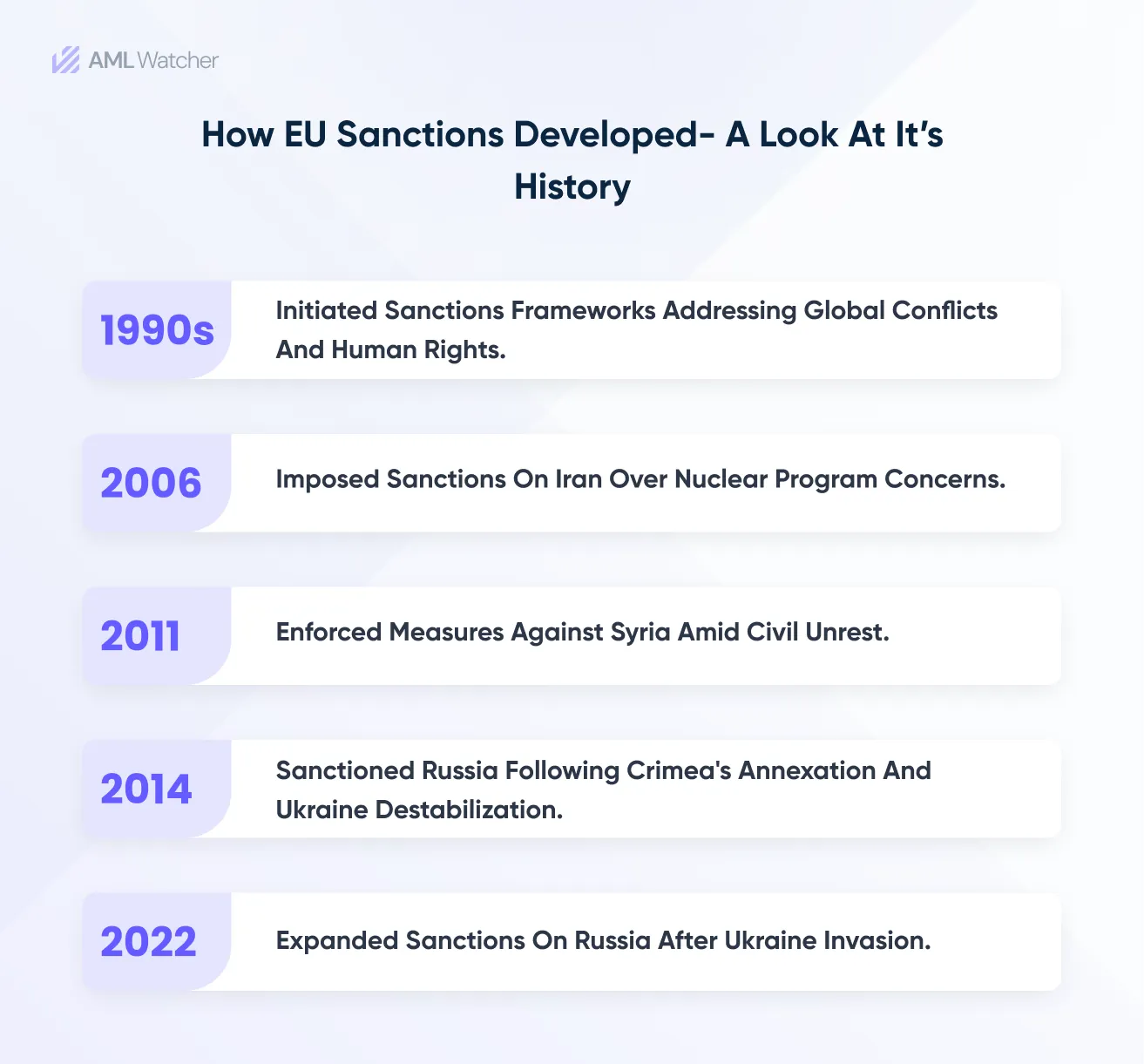
EU sanctions are adopted by the Council of the European Union under the Common Foreign and Security Policy (CFSP) to promote international peace, protect human rights, combat terrorism, and respond to threats to regional or global stability.
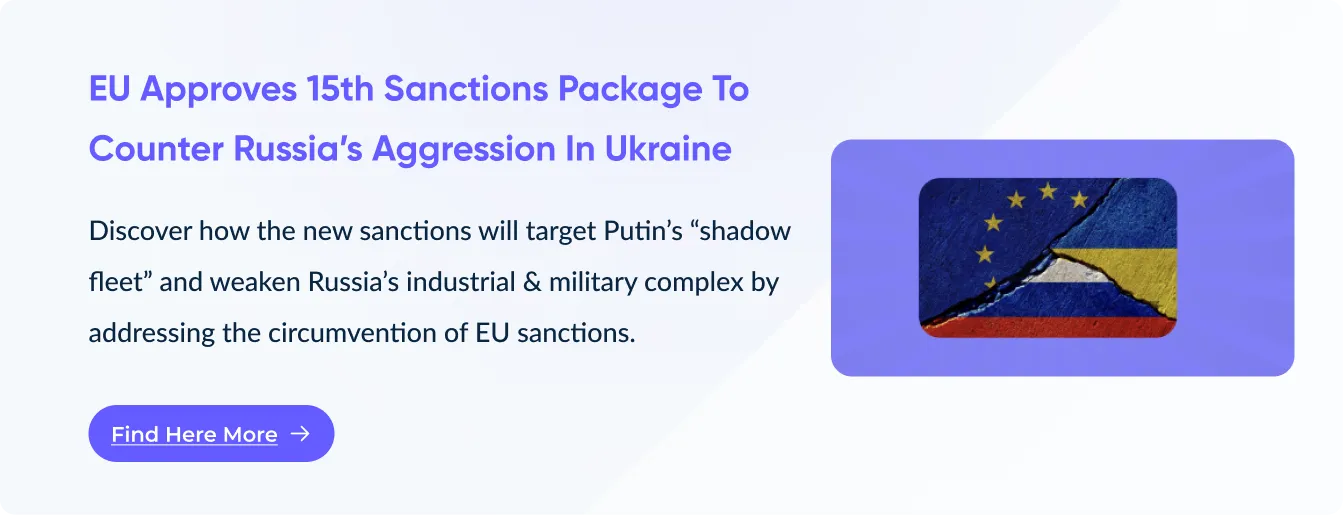
Organizations operating within the EU typically screen customers and counterparties against the EU Consolidated Financial Sanctions List, which combines all EU financial sanctions into a single searchable database. Following Russia’s invasion of Ukraine in 2022, for example, the EU imposed extensive sanctions on Russian financial institutions and other sectors.
UN Sanctions
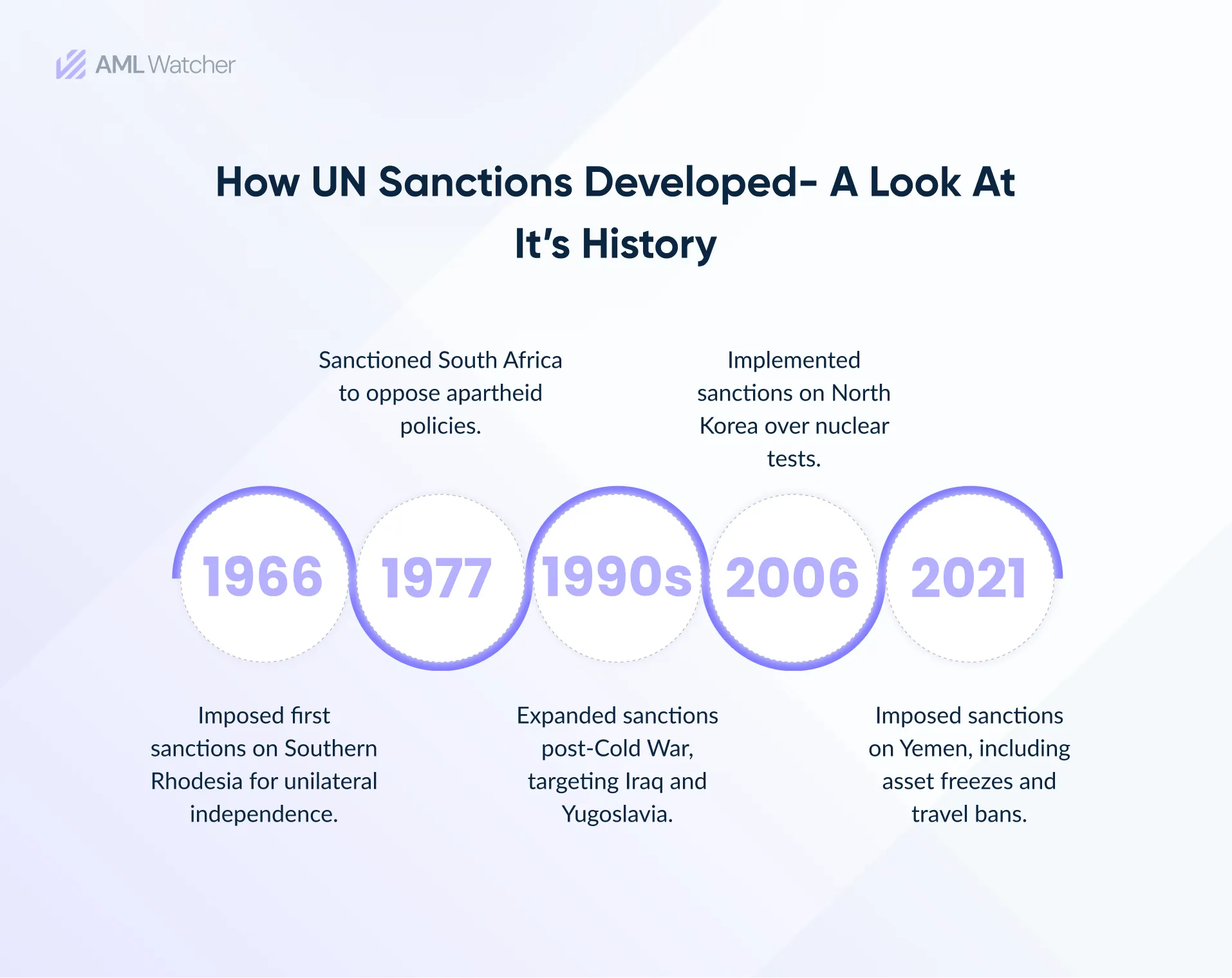
The United Nations Security Council (UNSC) imposes sanctions through resolutions that are legally binding on all UN member states. These measures address threats such as armed conflict, nuclear proliferation, and terrorism, although implementation and enforcement are carried out by individual countries.
Organizations with international operations also monitor the UN Security Council Consolidated Sanctions List, which serves as the basis for sanctions implementation in many jurisdictions. North Korea’s nuclear weapons program remains one of the most prominent examples of UN sanctions.
Key Differences Between OFAC, EU, and UN Sanctions
Although OFAC, EU, and UN sanctions share the common objective of combating financial crime and protecting international security, they differ in their legal authority, decision-making process, jurisdiction, and enforcement.
Understanding these differences helps financial institutions determine which sanctions lists to screen, how frequently to screen, and which regulatory obligations apply across different jurisdictions.
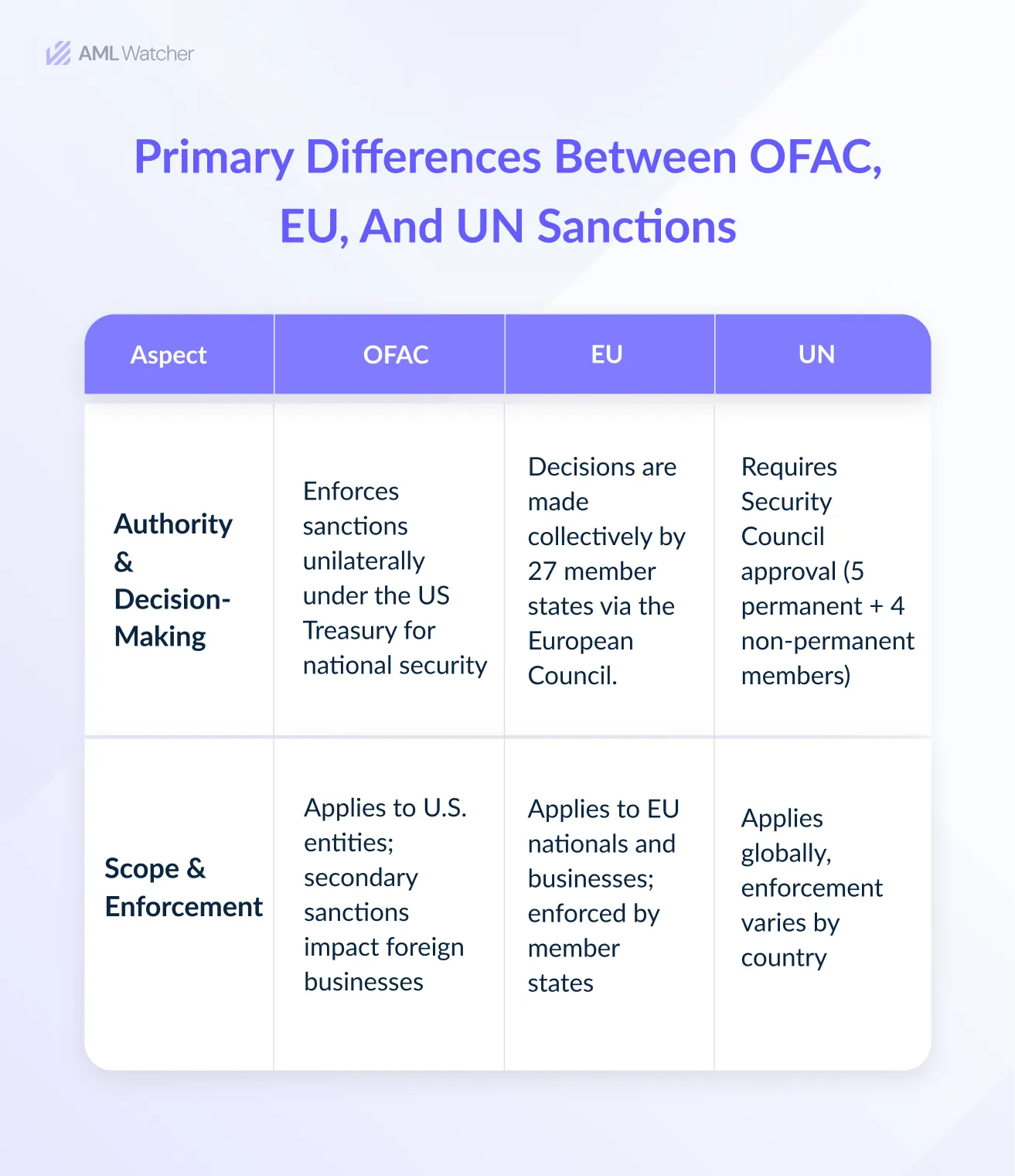
The compliance implications of these sanctions regimes extend beyond legal interpretation. Different authorities publish sanctions updates independently, apply different designation criteria, and enforce different legal obligations. As a result, multinational organizations cannot rely on a single sanctions list. They must continuously screen customers, beneficial owners, and transactions across multiple sanctions regimes to reduce regulatory risk and avoid enforcement actions.
A Unified Front: Similarities That Bind OFAC, EU, and UN Approaches
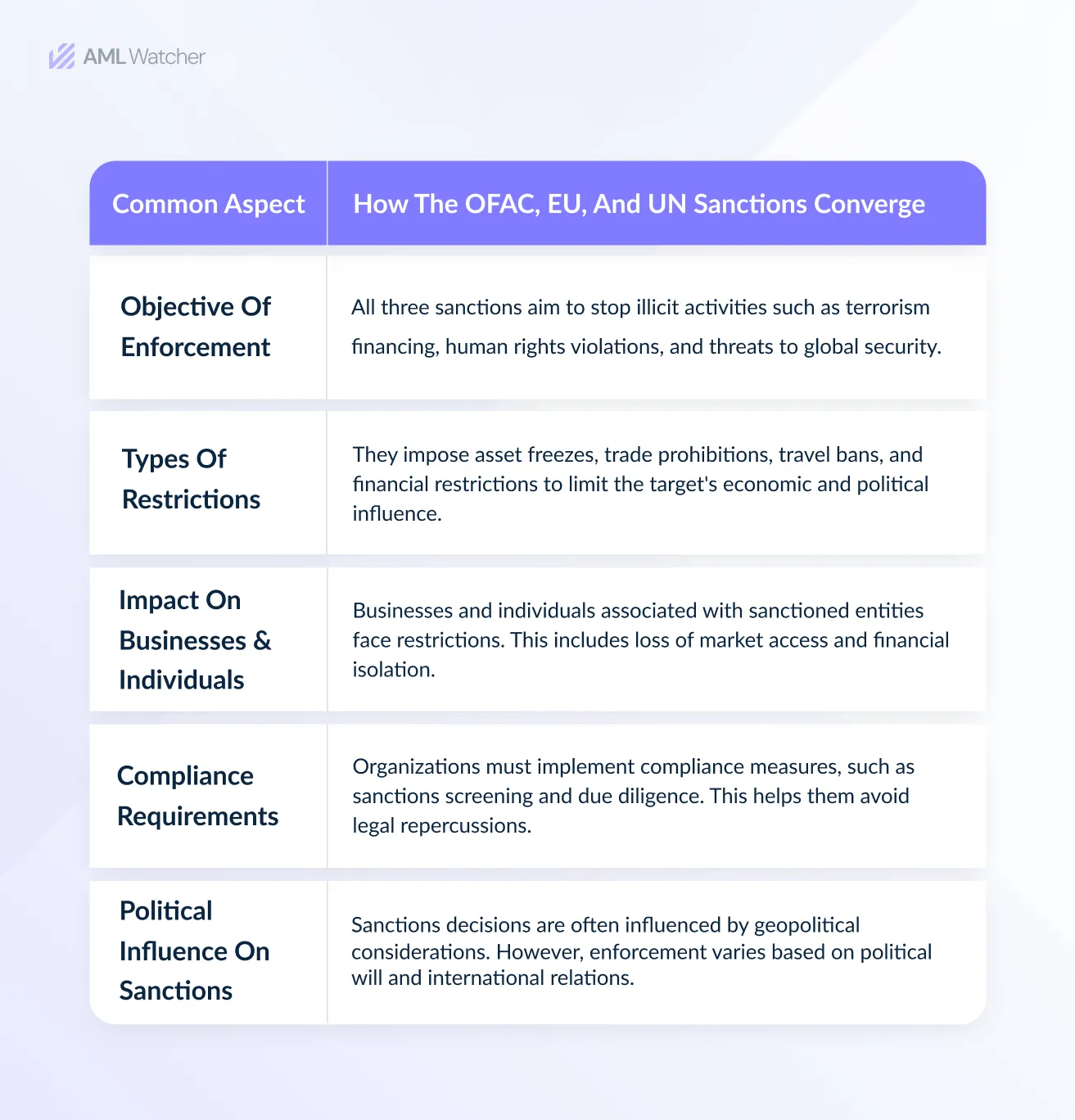
Although OFAC, EU, and UN sanctions differ in their legal authority and enforcement, they share the same objective of restricting financial activity linked to terrorism, money laundering, human rights abuses, and threats to international security. All three sanctions aim to stop illegal activities such as money laundering, terrorist financing, and human rights violations. Here are some additional common aspects among the three.
Although their objectives are similar, sanctions can take different forms. Targeted sanctions focus on specific individuals, entities, or sectors through measures such as asset freezes and travel bans, while comprehensive sanctions impose broader restrictions on an entire country or economy. Understanding this distinction helps compliance teams determine the scope of sanctions screening and risk assessment.
Sanctions and AML Compliance: Navigating Political Minefields
When discussing AML compliance, the EU Blocking Statute also comes into play. Formally known as Council Regulation (EC) No 2271/96, the EU Blocking Statute was originally introduced in the 1990s to protect European companies from the extraterritorial reach of U.S. sanctions on Cuba, Iran, and Libya.
The EU Blocking Statute prevents certain EU operators from complying with specified extraterritorial U.S. sanctions unless the European Commission grants authorization.
The Blocking Statute aims to shield EU companies from having to follow non-EU laws that the EU considers invalid within its borders.
For instance, a U.S.-based business may find itself subject to OFAC sanctions. But operating in the EU means adhering to EU sanctions that may differ slightly in scope or timing.
A financial institution might face the dilemma of being penalized under U.S. sanctions for doing business with a party that is still operational under EU or UN regulations.
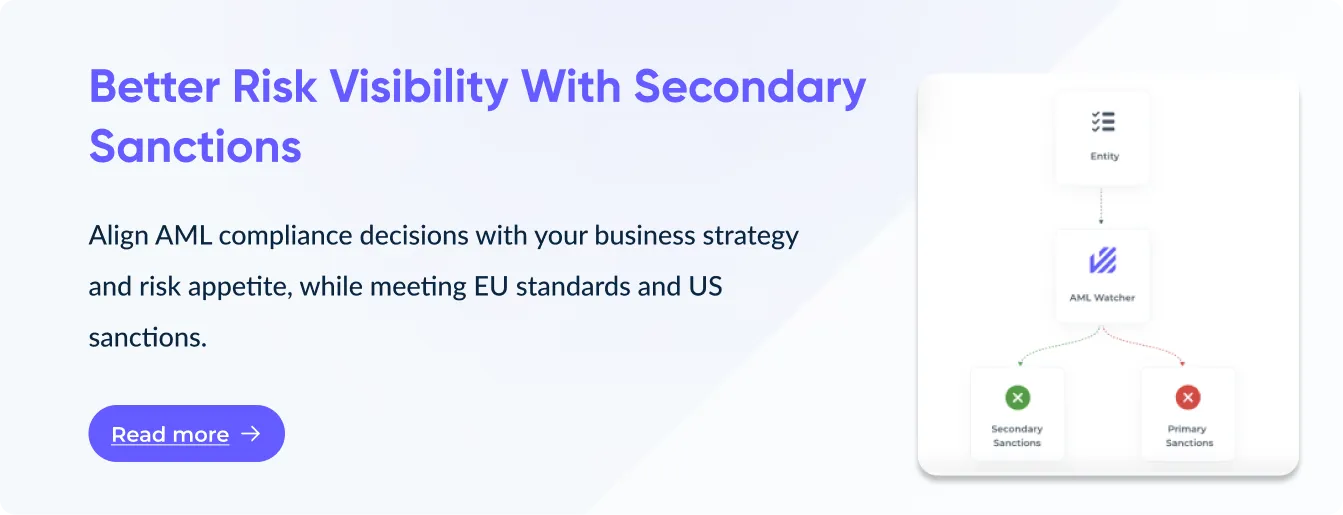
To manage these risks, organizations need risk-based sanctions screening programs that support customer, counterparty, and beneficial ownership screening while adapting to regulatory changes across different jurisdictions.
Sanctions screening should also be distinguished from transaction monitoring. Sanctions screening verifies whether customers, beneficial owners, or counterparties appear on sanctions lists before or during a business relationship, whereas transaction monitoring identifies suspicious payment activity that may indicate sanctions evasion, money laundering, or terrorist financing. Both controls complement one another within an effective AML compliance framework.
AML Watcher helps organizations screen customers and counterparties against national and international sanctions lists while keeping pace with regulatory changes through automated updates.
How AML Watcher Ensures Compliance with EU, UN, and OFAC Sanctions
AML Watcher helps organizations manage compliance across OFAC, EU, UN, and other global sanctions regimes through automated sanctions screening, consolidated watchlists, and continuous regulatory updates.
1. Comprehensive Sanctions Screening
AML Watcher regularly monitors global sanction lists and watchlists, including EU, UN, and OFAC sanctions, to ensure ongoing compliance.
2. Real-Time Updates
AML Watcher incorporates real-time updates from regulatory bodies to ensure organizations remain compliant with changing sanctions regimes.
3. Automated Risk Detection
The system searches persons and companies against local and international sanction lists to reduce false positives and rapidly detect high-risk connections.
4. Customizable Screening Parameters
Businesses may modify screening criteria to satisfy the unique needs of EU, UN, and OFAC legislation, resulting in fewer needless alerts.
5. Managing Cross-Jurisdictional Sanctions Obligations
AML Watcher supports organizations managing obligations across multiple sanctions frameworks by screening customers and counterparties against OFAC, EU, UN, and other applicable sanctions lists, helping compliance teams make informed risk-based decisions.
Frequently Asked Questions
- No commitment needed
- Complete AML Database at your service
- Access our all-in-one dashboard


Tier-2 PSPs in ... must demonstrate automated monitoring, layered CDD, &...
See the Full Regulatory Expectation70–80% less manual work, 95% less fatigue, TruRisk Agent makes compliance effortless.
Experience Agentic AMLMove Beyond Articles. Activate AML Intelligence.
Switch to AML Watcher today and reduce your current AML cost by 50% - no questions asked.
- Find right product and pricing for your business
- Get your current solution provider audit & minimise your changeover risk
- Gain expert insights with quick response time to your queries