

 Alert!


6 Best Practices For Efficient PEP Screening
PEP
October 1, 2024


- How HSBC Breached AML Supervisory Obligations?
- What AML Measures Are Enforced By FINMA?
- Understanding PEP Screening and Risk Classification
- Managing High-Risk PEPs Under Global Regulatory Guidance
- Challenges With Traditional PEP Screening Solutions
- Strengthening PEP Screening With Accurate Risk Intelligence
- AML Watcher Improves Compliance Through Effective PEP Screening

Politically exposed persons continue to present elevated AML and corruption risks for financial institutions worldwide. Regulatory actions against global banks have repeatedly shown how weak PEP controls, delayed reporting, and ineffective due diligence can expose institutions to financial crime and regulatory penalties.
One notable example involved HSBC Private Bank (Suisse) SA, which faced enforcement action from Switzerland’s financial regulator FINMA over banking relationships linked to politically exposed persons.
In December 2021, FINMA imposed a variety of sanctions on the subsidiary of HSBC involving the transfer of multiple transactions of over $300 million between Switzerland and Lebanon between 2002 and 2015.
The regulator discovered that the institution’s actions had breached serious anti-money laundering laws.
This enforcement action served as a warning for financial institutions to strengthen AML controls, monitor politically exposed persons effectively, and report suspicious activities on time.
How HSBC Breached AML Supervisory Obligations?
HSBC Private Bank (Suisse) SA deliberately breached supervisory law by neglecting to appropriately investigate the sources, purpose, or background of assets in two high-risk business partnerships that were PEPs, totaling more than $300 million in transactions between 2002 and 2015.
Originating from a government entity, the funds were transferred from Switzerland to Lebanon and swiftly moved back to accounts in Lebanon, all without the bank explaining the usage of a transitory account.
HSBC failed to uncover money laundering indicators, didn’t comply with due diligence standards for politically exposed persons (PEPs), and failed to submit suspicious actions to the Money Laundering Reporting Office until 2020, despite agreeing to terminate the accounts in 2016 owing to known risks.
This shows a major violation of both the anti-money laundering regulations and suspicious profile reporting duties.
What AML Measures Are Enforced By FINMA?
The Swiss financial regulator, FINMA, has mandated that HSBC Private Bank (Suisse) SA:
- Review all existing relationships involving politically exposed persons and high-risk customers.
- Reassess customer risk classifications across the institution.
- Suspend new PEP relationships until independent auditors verify remediation measures.
- Submit governance and accountability reports to FINMA regarding board and executive oversight responsibilities.
This improves:
- readability
- scannability
- professionalism
This highlights that financial institutions must stay vigilant about their PEP clients and, to comply with the latest AML regulations, must adopt efficient PEP screening solutions to detect the associated risks with them.
Understanding PEP Screening and Risk Classification
FATF Recommendations 12 and 22 require financial institutions and designated non-financial businesses and professions (DNBPs) to implement risk-based PEP screening measures to detect money laundering and corruption risks.
When conducting PEP screening, it is essential to pinpoint politically exposed individuals, as well as their relatives and close associates (RCAs). Additionally, it’s important to note that not all PEPs carry the same level of risk, as there are distinctions within the PEP category itself.
Categorization Based On 4 Levels of Risk
Different PEPs present different levels of AML/CFT risk. In light of this, it is possible to categorize the PEP risk levels into the following 4 risk levels:
Managing High-Risk PEPs Under Global Regulatory Guidance
After a detailed analysis of the PEP cases, international authorities like the FCA, FinCEN, and FATF have stressed that banks can manage high-risk PEPs without automatically excluding them.
- FATF: FATF recommendations 12 and 22 have established special measures that set the rules for improved due diligence, which enables banks to reduce the risks and, at the same time, provide equality in access to banking services.
This approach complies with the regulations of various countries, for example, the United States Bank Secrecy Act and the United Kingdom Proceeds of Crime Act.
- United States: PEP regulations under the Bank Secrecy Act (BSA) and Patriot Act require risk-based AML/CFT programs with customer due diligence (CDD) and enhanced due diligence (EDD) for high-risk PEPs. Firms must report suspicious activities to FinCEN.
- United Kingdom: FCA mandates PEP screening MLR 2017 & ATCSA 2001, similar to EU standards; ongoing review of PEP treatment by banks and financial firms, with findings expected in 2024.
- Canada: Under the Proceeds of Crime (Money Laundering) and Terrorist Financing Act (PCMLTFA), PEP screening is mandatory, with foreign PEPs always considered high-risk. The Financial Transactions and Reports Analysis Centre of Canada (FINTRAC) enforces these PEP regulations.
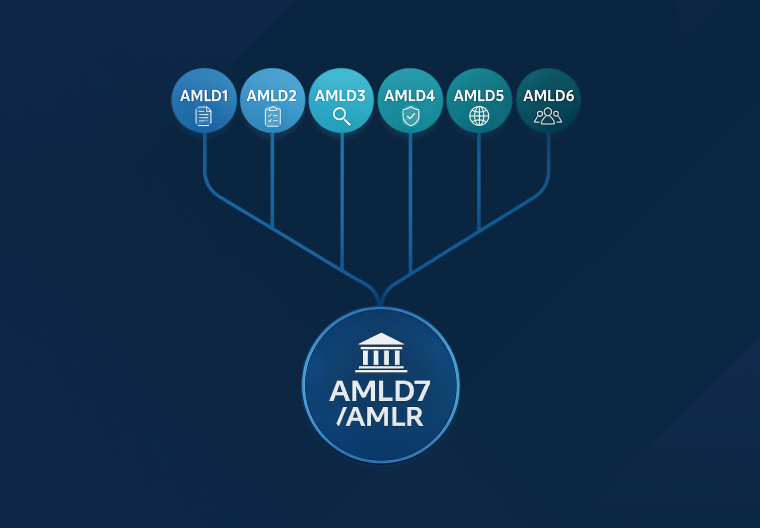
- European Union: Uniform PEP screening policy under AML Directives, especially the 6AMLDs, following a risk-based approach aligned with FATF standards.
- Australia: The Australian Transaction Reports and Analysis Center – AUSTRAC oversees AML/CTF compliance, requiring financial institutions to conduct PEP screening and adhere to CDD guidelines.
All these AML regulatory bodies emphasize one key point in the case of efficient PEP screening: adopt a risk-based screening solution.
Despite regulatory expectations, many traditional screening solutions still struggle to deliver accurate and risk-based PEP monitoring.
Challenges With Traditional PEP Screening Solutions
Global businesses, especially financial institutions often fail to identify, categorize, and highlight low to high-risk PEPs due to their screening solution’s shortcomings and failures. These are:
Lack of a Single Universal PEP Definition
Different countries have varying criteria for what constitutes a PEP, which complicates the implementation of a unified screening process.
For instance, FATF has broader criteria to consider any person as a PEP, whereas the US, UK, Canada, and other countries have different explanations of PEPs.
Thus, multiple screening solutions offer PEP screening solutions with a limited scope or consider PEP that falls under a specific country definition, which limits the screening outcomes.
Limited Jurisdictional PEP Coverage
For thorough risk management, PEPs from occupied or less-recognized territories must be included in the Politically Exposed Person database.
For example, a financial institution operating in Eastern Europe utilizes a smart PEP solution to keep an eye on each PEP client from occupied regions such as Crimea or Northern Cyprus.
Including local PEPs from various districts and administrative regions within Crimea or Northern Cyprus, the organization efficiently recognizes and reduces risks linked with individuals involved in local governance and political activities that could otherwise go unnoticed.
Inefficiency With Different Languages
PEP data is released in a variety of languages and formats, which makes it challenging to coordinate data across international jurisdictions and raises the possibility of errors and false positives or negatives.
Multiple leading solution providers in the market are focused on specific countries or areas, therefore they only cover those languages and ignore the others, which results in a larger percentage of missing data with higher false positives.
Delayed Data Updates and Limited Flexibility
The inability to regularly update and modify screening algorithms in response to shifting definitions, PEP status, and regulatory changes can put a burden on system capacity and cause errors and delays.
Many screening solutions fail to update their systems quickly for changes in PEP status or sanctioned lists, which can lead to institutions losing millions by using outdated information.
Limited Coverage Across Smaller Jurisdictions
Certain vendors limit their focus to big international sanction lists that encompass densely populated countries while ignoring lists of less populated or localized places.
Institutions are exposed to inaccurate and ineffective outcomes that raise local regulatory concerns due to this narrow PEP data scope.
Operational Burden and False Positives
Broader definitions like those explained by FATF & EU can lead to higher false positive outcomes, while narrower definitions utilized by the U.S. or Canada may miss certain high-risk individuals.
These high false positive rates create the need for more resources for AML compliance teams to review and verify each dataset.
On the other side, narrow definitions might create a smooth process but can leave gaps in screening, failing to identify some high-risk individuals.
Mostly screening solutions failed to create a balance, and thus produced unreliable and wrong data.
Compliance teams often struggle to access reliable and comprehensive PEP datasets when legacy screening systems fail to provide accurate coverage.
This challenge has increased demand for screening systems that offer broader jurisdictional coverage, real-time updates, and adaptable risk classification.
Strengthening PEP Screening With Accurate Risk Intelligence
Effective PEP screening depends on accurate data coverage, timely updates, flexible risk classification, and jurisdiction-specific intelligence. Financial institutions that rely on outdated or narrowly scoped screening systems often struggle with false positives, missed high-risk entities, and regulatory gaps. The following practices help organizations strengthen their PEP screening frameworks while improving AML compliance outcomes.
Broader Jurisdiction Coverage
AML Watcher provides coverage for PEP data from less-recognized, disputed, and smaller jurisdictions that are often overlooked by traditional vendors.
Our in-house data team extracts, analyzes, and maintains all PEP information from regions like Abkhazia, Crimea, Northern Cyprus, Nagorno-Karabakh, Kashmir, Kuril Islands, and many more.
This broader coverage helps financial institutions improve risk visibility and reduce screening blind spots.
Real-Time PEP Data Updates
Real-time PEP screening systems should update databases frequently to capture changes in sanctions, political appointments, and risk classifications.
These timely updates reduce the risk of undetected changes in PEP status, enhancing AML compliance and security.
This dynamic integration lowers the chances of AML compliance violations and allows financial institutions to take quick, well-informed actions without blocking client accounts.
Local PEP Data Coverage
AML Watcher successfully covers data for PEP level 4 & their associated risks that offer a quick screening of national as well as local PEPs, including regional officials and local politicians.
Detailed screening with granular data captures all relevant political figures, ensuring thorough due diligence.
Tailoring PEP Risk Levels
AML Watcher allows institutions to screen PEPs with different risk levels, based on their position, influence, and other risk criteria.
This adaptability lowers false positives and negatives and ensures that screening procedures meet the particular risk appetite of the organization.
Coverage Across Smaller Jurisdictions
With its scalable screening capabilities, AML Watcher offers the PEP data to screen customers from regions with populations of any size, even smaller than 100,000 people.
Smaller financial institutions and those operating in less populous areas like Gibraltar, South Ossetia, and Transnistria will especially benefit from this functionality.
Customizable PEP Screening Parameters
With AML Watcher, institutions may customize their screening criteria to match their unique risk profiles and regulatory landscapes.
Institutions may choose their definitions from a range of regional and international standards definitions, such as the legislation of the EU and the UK, the FATF, or particular national recommendations.
AML Watcher Improves Compliance Through Effective PEP Screening
Financial institutions operating across multiple jurisdictions require PEP screening systems that can adapt to changing regulatory expectations, evolving political exposure risks, and fragmented global datasets.
AML Watcher supports AML compliance teams with real-time PEP monitoring, extensive jurisdictional coverage, customizable risk classification, and detailed screening intelligence designed for risk-based compliance programs.

- No commitment needed
- Complete AML Database at your service
- Access our all-in-one dashboard


Tier-2 PSPs in ... must demonstrate automated monitoring, layered CDD, &...
See the Full Regulatory Expectation70–80% less manual work, 95% less fatigue, TruRisk Agent makes compliance effortless.
Experience Agentic AMLMove Beyond Articles. Activate AML Intelligence.
Switch to AML Watcher today and reduce your current AML cost by 50% - no questions asked.
- Find right product and pricing for your business
- Get your current solution provider audit & minimise your changeover risk
- Gain expert insights with quick response time to your queries